


"This stuff is great. I have been indoor sowing since December and we have no gnats! It's great stuff if yiu are growing alot of stuff indoors. I have 300+ plants and we didn't want to deal with gnats. Excellent product!!"
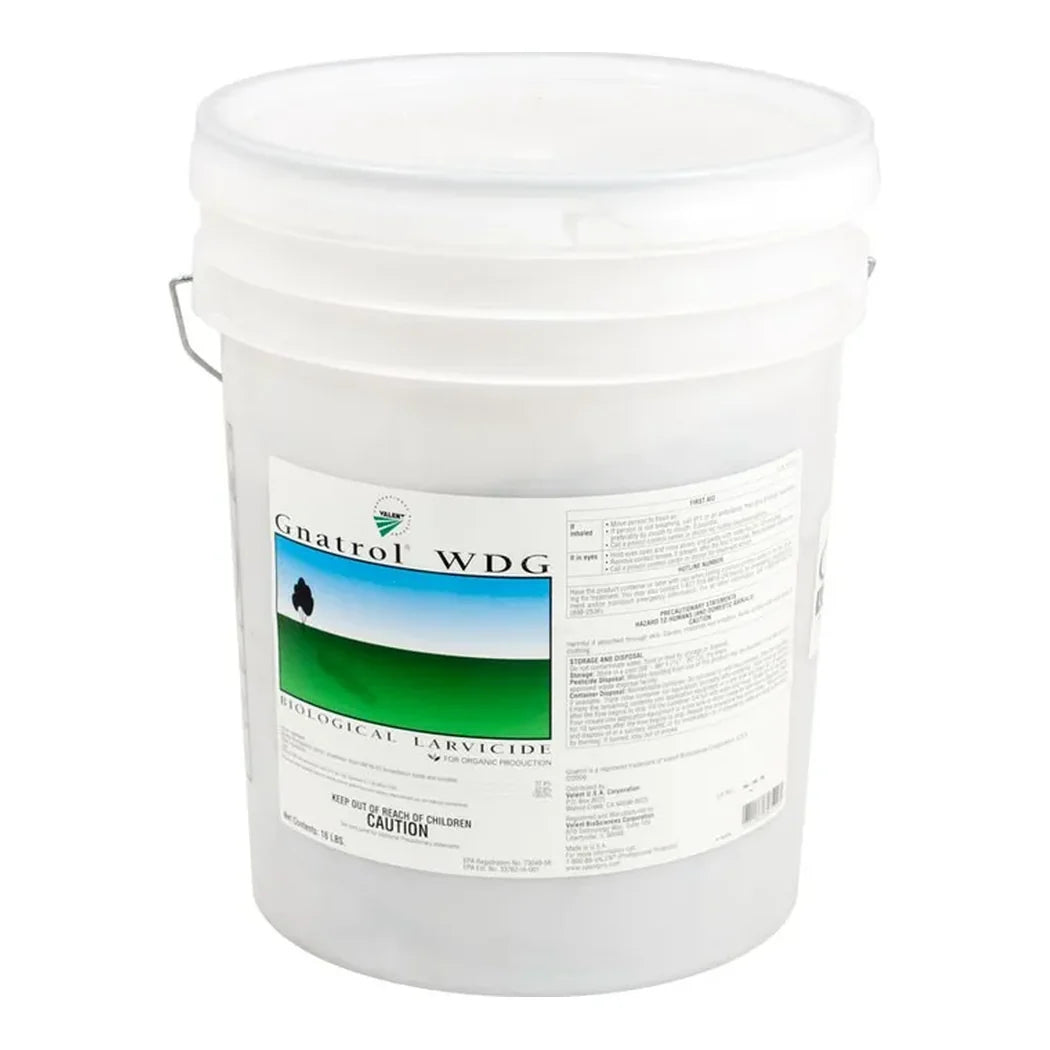
Gnatrol WDG for Fungus Gnat Larvae in Media
This is a soil-drench insecticide built on Bacillus thuringiensis subsp. israelensis, strain AM 65-52, at 37.4% active ingredient. Adults on the sticky cards are the sign, but the damage sits in the top of the media where larvae chew on root hairs. Once larvae feed on it they stop eating, and they generally respond within 24 hours. The label sets light infestations at 3.2 to 6.4 oz per 100 gallons and heavy infestations at 13 to 26 oz per 100 gallons. With eggs, larvae, pupae and adults all present, the label calls for 3 weekly applications at the heavy rate. Follow that with regular light-rate drenches to hold a maintenance program. Apply toward the end of the irrigation period, using enough water to wet the surface. Under the benches deserves the high rate too, since that is a primary breeding area. The re-entry interval is 4 hours under the Worker Protection Standard. Mixers and applicators need waterproof gloves and an N-95 class respirator, because the dust can sensitize with repeated exposure.
A Biological Larvicide With a Narrow Target
The narrow target is the point, and also the limit. It will not touch adult gnats, so anything flying when you start keeps flying until the larval population collapses behind it. Timing matters more than strength here, because a drench only counts while larvae are in the media. Pair the program with yellow cards so you can see adult numbers fall over those weeks. The dry granule is easy to weigh and mix, and it stores more stably than a liquid does. Keep it somewhere cool and dry, within the label's storage range. The label names ornamental and nursery plantings, potting mixes, tomatoes, leafy and cole crops, cucumbers, peppers and eggplants. It carries an OMRI listing for growers supplying the organic market. Drip and sprinkler chemigation are on the label as well, with the backflow equipment it specifies. Check your state's registration before adding any crop that the label does not name. A heavily overwatered room will keep producing gnats, so dry-down habits still belong in the plan.
Key Features
- BTI strain AM 65-52: The active ingredient targets fungus gnat larvae feeding in the top of the media.
- Soil drench application: Mix it with enough water to wet the surface above and under benches where larvae live.
- Two rate tiers: Light rates hold a maintenance program, and heavy rates handle an existing infestation.
- Water-dispersible granule: A dry granule is easier to measure accurately than a liquid concentrate.
- OMRI listed: The label reads for organic production, which suits growers serving that market.
- Short re-entry window: A short REI lets crews return to the bay soon after a drench.
- Chemigation permitted: Greenhouse drip and sprinkler injection are on the label with the required safety equipment.
Technical Specifications
| Specification | Value |
|---|---|
| Active Ingredient | Bacillus thuringiensis subsp. israelensis, strain AM 65-52 |
| Concentration | 37.4% |
| Potency | 3,000 ITU per mg (1.36 billion ITU per lb) |
| Target Pest | Fungus gnat larvae |
| Formulation | Water-dispersible granule |
| Light Infestation Rate | 3.2 to 6.4 oz per 100 gallons |
| Heavy Infestation Rate | 13 to 26 oz per 100 gallons |
| Application | Soil drench; drip and sprinkler chemigation in greenhouses |
| REI | 4 hours |
| Organic Status | OMRI listed |
| Storage | Cool, dry place, 59 to 86 F |
| EPA Reg. No. | 73049-56 |
| Sizes | 1 lb, 16 lb |