
Irrigation + Water Delivery Systems + Fittings
Irrigation supplies put a measured dose of water and feed at every plant site, from one hose to a full room of drippers. Hand-watered rooms run a hose and wand, container rooms add drippers or water rings, and large rooms build valved zones with meters.
-
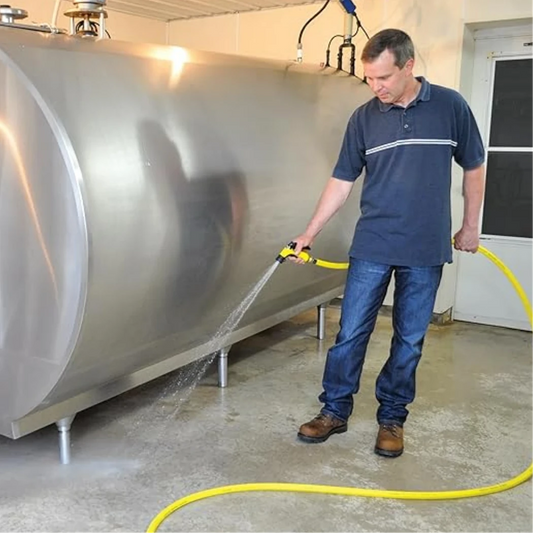
Dramm ColorStorm Yellow Hose 5/8- 100 Ft.
Vendor:DrammRegular price $121.08 USDRegular priceUnit price per -
Dramm Rain Wand Colormark 30 inch
Vendor:DrammRegular price $33.13 USDRegular priceUnit price per -
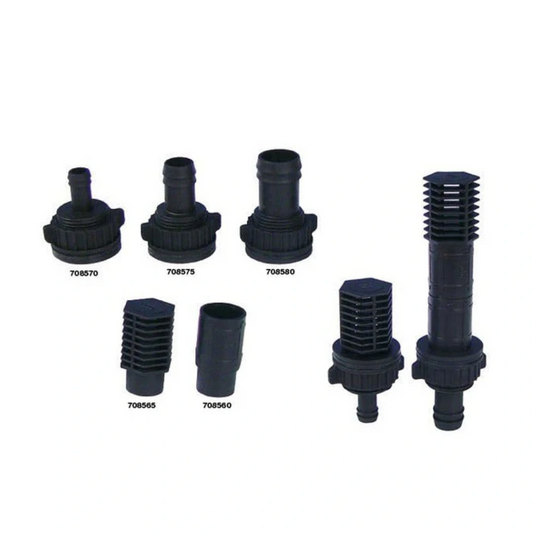
EcoPlus Ebb and Flow Fittings Kit
Vendor:EcoPlusRegular price $10.95 USDRegular priceUnit price per -
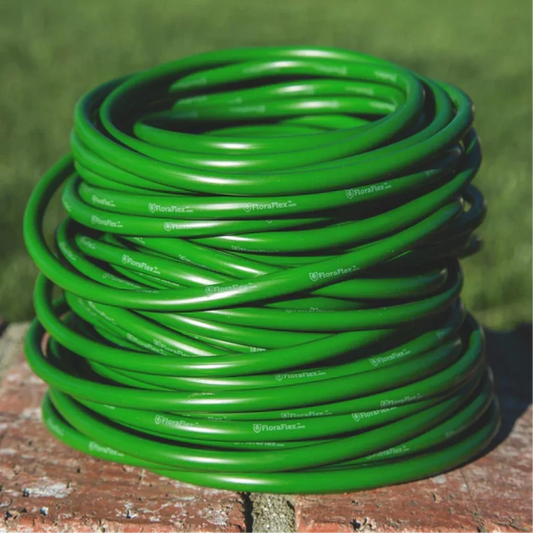
FloraFlex 3/16 in ID - 1/4 in OD Green Tubing 100 ft Roll
Vendor:FloraFlexRegular price $17.69 USDRegular priceUnit price per -
CO2 tube 1/4 inch with holes - 100' feet
Vendor:*AAA NO BrandRegular price $48.68 USDRegular priceUnit price per -
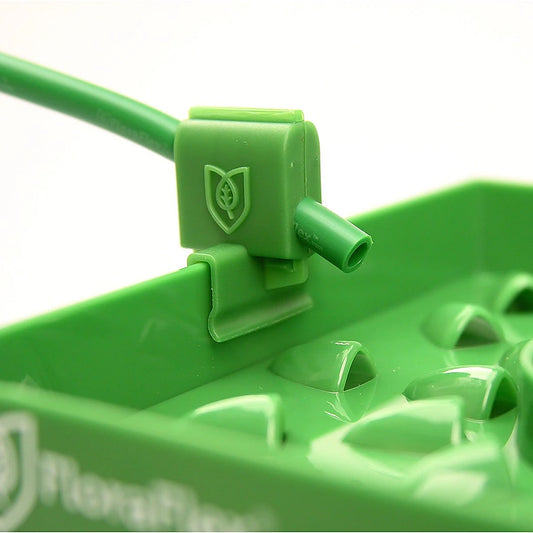
FloraFlex 6 FloraCap 3.0 Top Feed Dripper for Rockwool Cubes
Vendor:FloraFlexRegular price $4.46 USDRegular priceUnit price per -
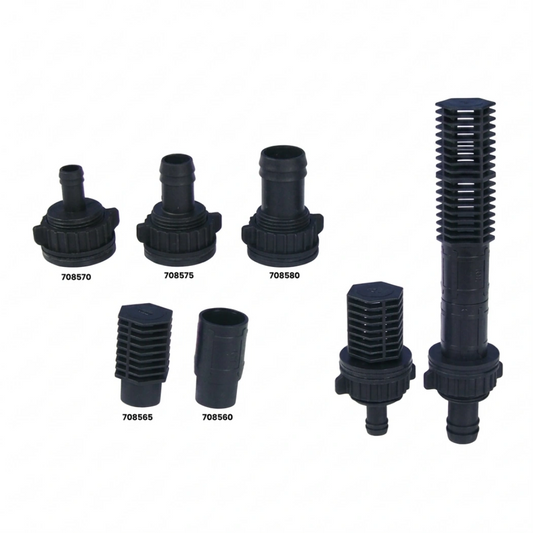
EcoPlus Ebb and Flow Fittings -- 1/2 inch Tub Outlet
Vendor:EcoPlusRegular price $3.75 USDRegular priceUnit price per -
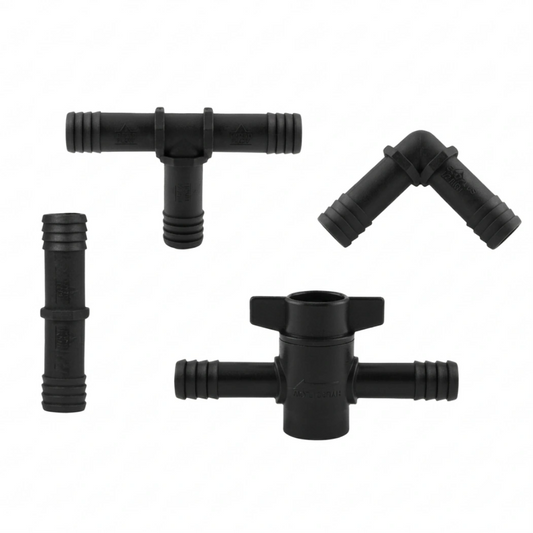
Hydro Flow 1/2 in Barbed Tee | 10 Pack | Poly Tubing Connector
Vendor:Hydro Flow / NetafimRegular price $5.28 USDRegular priceUnit price per -
EcoPlus Ebb and Flow Fittings -- Screen
Vendor:EcoPlusRegular price $1.07 USDRegular priceUnit price per -
FloraFlex 4 FloraCap 3.0 Top Feed Dripper for Rockwool Cubes
Vendor:FloraFlexRegular price $1.99 USDRegular priceUnit price per -
Hydro Flow 1/2 in Barbed Elbow | 10 Pack | 4-Barb Poly Fitting
Vendor:Hydro Flow / NetafimRegular price $5.20 USDRegular priceUnit price per -
Red EZ-Clone Sprayer (360 Degree)
Vendor:EZ-CloneRegular price $23.74 USDRegular priceUnit price per -
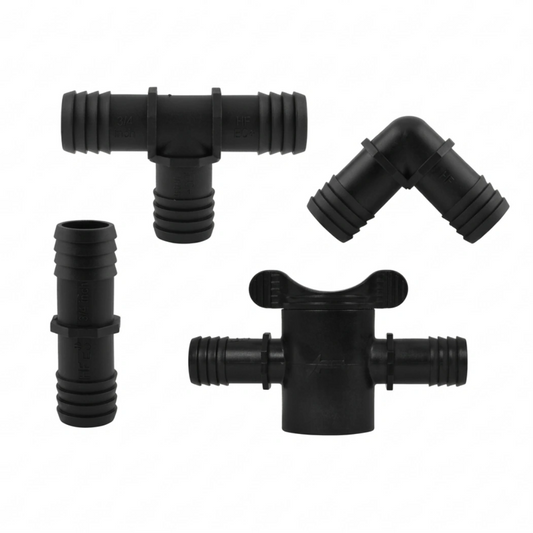
Hydro Flow 3/4 in Barbed Elbow | 10 Pack | 4-Barb Poly Fitting
Vendor:Hydro Flow / NetafimRegular price $8.74 USDRegular priceUnit price per -
Netafim Super Flex UV White PE Tubing 5/3mm 1000ft coil
Vendor:NetafimRegular price $68.31 USDRegular priceUnit price per -
Save A Drop Inline Water Flow Counter Meter
Vendor:*AAA NO BrandRegular price $19.15 USDRegular priceUnit price per -
EcoPlus (Hydro Flow) Barbed Connectors - 3/4 inch Tee (10 Pack)
Vendor:Hydro FlowRegular price $9.57 USDRegular priceUnit price per













Irrigation + Water Delivery Systems + Fittings
Irrigation Supplies: Drip, Fittings, Valves and Watering Tools
Irrigation supplies carry water and feed from the tank to every plant site. This collection covers drippers, tubing and fittings, zone valves and meters, plus hoses, wands and sprayers for hand work. Netafim drip parts make up much of the range. New to feeding by line? Start with our hydroponic irrigation system guide....

To narrow it down, browse our drip emitters and stakes or hoses and connectors. Both sit within the wider air, water and CO2 range.
Types of Irrigation Supplies
Drippers, Tubing and Water Rings
Netafim Woodpecker Junior drippers are pressure compensating, so a 2 GPH green emitter holds its rate from the first pot to the last. FloraFlex 3/16 inch tubing runs from a manifold to each pot. Hydro Halo water rings spread feed through 54 pores around a container.
Fittings, Valves and Meters
Barbed fittings, ball valves and drains join lines into a manifold. A Netafim Series 80 solenoid valve opens a 3/4 inch zone on a 24VAC signal from a timer or controller. The Save A Drop inline meter reads hose flow to 0.1 gallon, so each zone gets a known volume.
Hoses, Wands and Sprayers
Dramm ColorStorm rubber hose fills reservoirs and feeds benches at up to about 125 PSI. A Dramm Touch N Flow wand delivers a soft shower at 2.8 to 10.6 GPM. Siebring Kruser carts mist foliage at up to 750 PSI.
How Growers Lay Out Irrigation
Most rooms run a mainline to a manifold, then poly laterals with emitters and microtube to each pot. Valves split the room into zones, and a meter checks what each zone actually receives. A filter at the head of each zone keeps grit out of the emitters.
Frequently Asked Questions
Pressure compensating drippers vs non: what is the difference?
A pressure compensating dripper holds the same flow whether it sits near the pump or at the end of a long run. Netafim says spacing and run length no longer shift the flow on its Woodpecker Junior. Its CNL valve also shuts at low pressure, so lines do not drain between cycles.
How does drip irrigation work for indoor growing?
A pump or pressurized line feeds a manifold, and emitters meter feed into each pot through microtube or a water ring. A controller opens a solenoid valve for each cycle. Growers check runoff and volume per zone with a flow meter to keep pots evenly fed.
How do you connect irrigation to a water supply?
Small setups thread onto a standard 3/4 inch garden hose fitting, as the Save A Drop meter and Dramm wands do. Larger rooms plumb a mainline into a manifold with 3/4 inch threaded valves. The Netafim Series 80 valve uses 3/4 inch FPT on both ends and runs from 7 to 150 psi.