


Athena Pro Bloom 0-12-24 | Soluble Flowering Fertilizer, 10 lb Box or 25 lb Bag
Athena Pro Bloom 0-12-24 | Soluble Flowering Fertilizer, 10 lb Box or 25 lb Bag
SKU: SKU:PRO-BL-25B
Ordering a large quantity of this item?
As long as the order total is more than $2K you can:
This item is heavily discounted and may not qualify for discounts.
Availability: Online | Will Call Locations Stock May Vary
Couldn't load pickup availability
A flower feed built on potassium sulfate carries no nitrogen of its own, so the Core sets the nitrogen and the Bloom sets the bulk. Athena Pro Bloom 0-12-24 is that flowering half of the Pro Line, a dry, fully soluble mix for a stock tank or a reservoir.



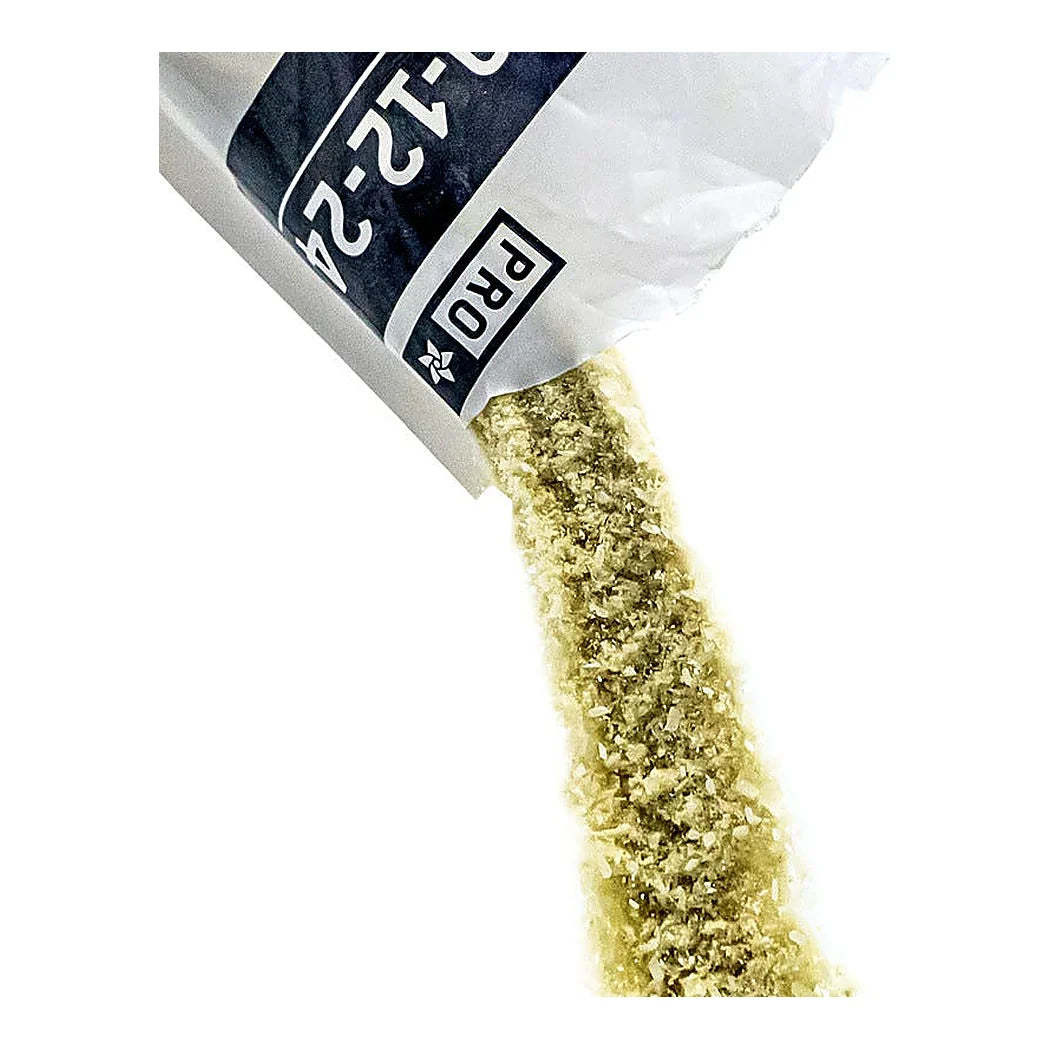
What Athena Pro Bloom 0-12-24 Puts in the Tank
The label reads 0-12-24: no nitrogen, 12 percent available phosphate and 24 percent soluble potash, with 3 percent magnesium, 9 percent sulfur and 0.1 percent iron as DTPA chelate. It is derived from monopotassium phosphate, potassium sulfate, magnesium sulfate and iron DTPA, and Athena makes it in California. The choice that defines it is potassium sulfate in place of potassium nitrate. Athena's reasoning is that sulfate drives secondary metabolite production, the terpenes and resins a flowering plant is grown for. The 9 percent sulfur on the label is where that comes from. Because there is no nitrogen in the bag, Pro Bloom never runs alone. It pairs with Pro Core, which carries the calcium, nitrogen and the rest of the micro package. The ratio is fixed at 1 g of Bloom to 0.6 g of Core. That ratio is how the two are dosed to any target EC, and it is why the Pro Line needs no separate booster. The grind is large and the mix is 100 percent soluble, so it dissolves at room temperature and leaves no sediment in a reservoir. There is nothing in it to clog a venturi, a doser or a peristaltic pump. It runs through Dosatron and Netaflex systems. The reservoir rate is 4 to 7 g per gallon from week 2 of flower, and the stock tank limit is 2.5 lb per gallon, agitated until dissolved. The concentrate guide works from a slightly weaker tank, and the dosage tables are written for that strength. Everything is measured by weight, never by volume, and the dry powder is never mixed with another fertilizer in dry or concentrate form. The line has a low heavy metal content. The 10 lb box and the 25 lb bag hold the same mix, with the box suited to a reservoir and the bag to a stock tank. Stored closed in the original pack between 45 and 85 °F and kept dry, it has a two year shelf life from the date of manufacture.
Running a Soluble Flowering Fertilizer Through a Stock Tank Without Precipitate
A soluble flowering fertilizer that carries phosphate and sulfate has one hard rule, and that is distance from the calcium until the irrigation line. Pro Bloom gets its own stock tank, Pro Core gets another, and the two meet only at final strength in the feed water. Phosphate and calcium at concentrate strength drop out as a white solid that clogs injectors and takes the calcium with it. Weigh the powder on a scale. A scoop of a large-grind mix changes weight with how it settled in the bag. The whole Pro Line is built on grams, not cups. Fill the stock tank with warm water, add the powder slowly with the agitator running, and keep it running until the solution is clear. A tank mixed to 2 lb per gallon matches Athena's dosage tables as written. A grower who mixes stronger or weaker has to rescale every rate in the chart. Set the injector ratios so the feed lands at 1 g of Bloom for every 0.6 g of Core. Then measure EC at the emitter and pH after it. Start the Bloom from week 2 of flower at the lower end of the 4 to 7 g per gallon range and climb as the canopy fills. Expect pH to hold steadier than it does on a nitrate-heavy feed. Sulfate and phosphate do not push the root zone upward the way nitrate does. Check run-off EC against the feed in coco and rockwool. A widening gap is salt accumulating and wants a larger drain fraction, not a weaker tank. Keep stock tanks lidded and out of light, because a clear concentrate in the sun grows algae within a week. Close the bag or the box after every weigh-out and keep it off a damp floor. Potassium sulfate and magnesium sulfate both pull water from the air, and a bag that cakes still dissolves but no longer scoops by weight.
Key Features
- 0-12-24, no nitrogen: 12% phosphate, 24% potash, 3% magnesium, 9% sulfur, 0.1% DTPA iron.
- Potassium sulfate, not nitrate: Sulfate for secondary metabolite production.
- 1 g Bloom to 0.6 g Core: The fixed ratio that doses the pair to any EC, no booster needed.
- 100 percent soluble, large grind: Dissolves at room temperature; no sediment, nothing to clog a doser.
- Stock tank or reservoir: Up to 2.5 lb per gallon concentrate; 4 to 7 g per gallon from week 2 of flower.
- Fertigation ready: Dosatron, Netaflex and peristaltic systems.
- Two year shelf life: Stored closed, dry, 45 to 85 °F.
- 10 lb box or 25 lb bag: Made in California by Athena Products.
Technical Specifications
| Specification | Value |
|---|---|
| Brand | Athena |
| Product | Pro Bloom, soluble flowering fertilizer |
| Analysis | 0-12-24 |
| Available phosphate | 12% |
| Soluble potash | 24% |
| Magnesium | 3% |
| Sulfur | 9% |
| Iron | 0.1%, chelated (DTPA) |
| Derived from | Monopotassium phosphate, potassium sulfate, magnesium sulfate, iron DTPA |
| Form | Dry, large-grind, 100% soluble |
| Pairs with | Athena Pro Core at 1 g Bloom : 0.6 g Core |
| Reservoir rate | 4 - 7 g per gallon from week 2 of flower |
| Stock tank | Up to 2.5 lb per gallon; Athena's tables assume 2 lb per gallon |
| Sizes | 10 lb box (PRO-BL-10, UPC 850038693565); 25 lb bag (PRO-BL-25B, UPC 850038693466) |
| Storage | Closed, dry, 45 - 85 °F; 2 year shelf life |
| Hazard | Eye and skin irritant; wear protective clothing when mixing |
| Made in | California, USA; Athena Products, Mira Loma, CA |