


What The Pro Silicate Label Declares, And What It Does Not
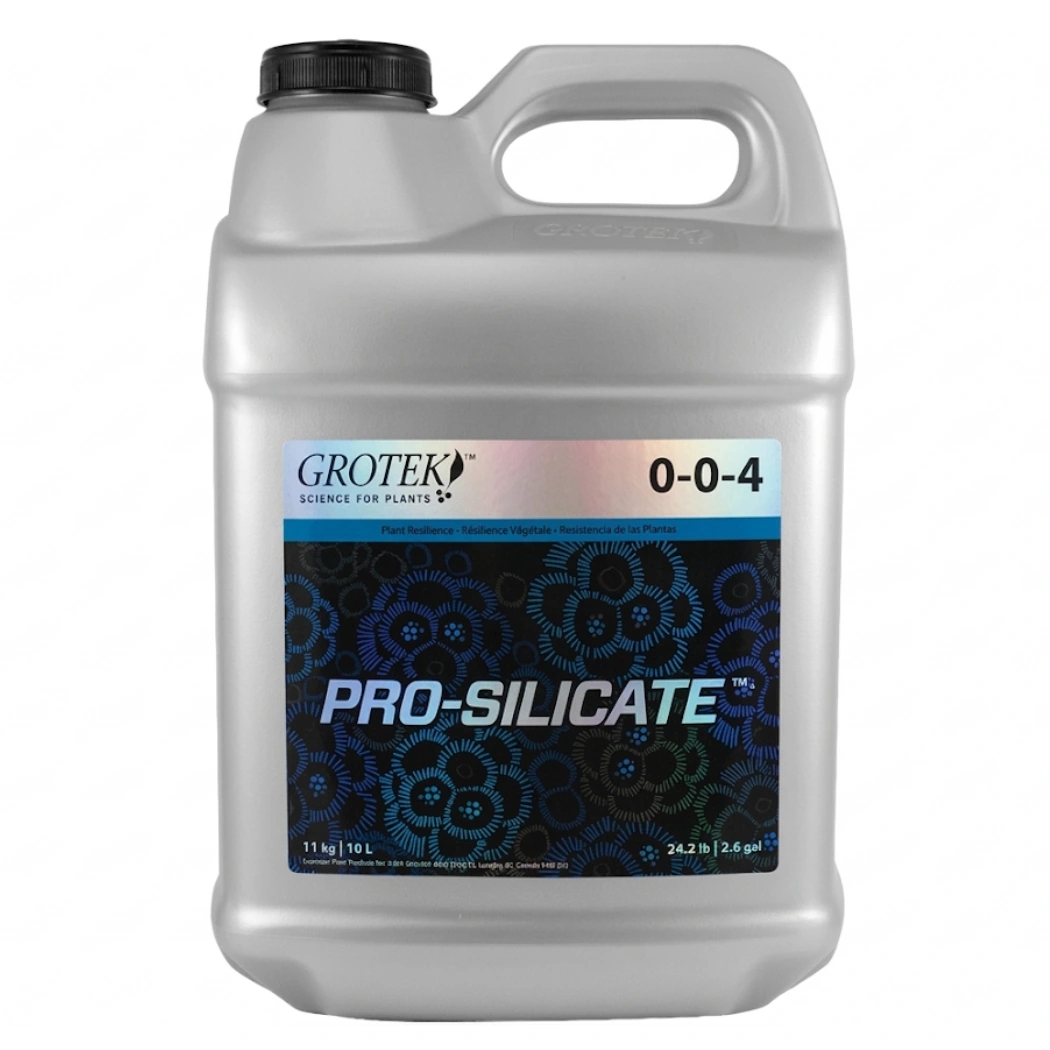
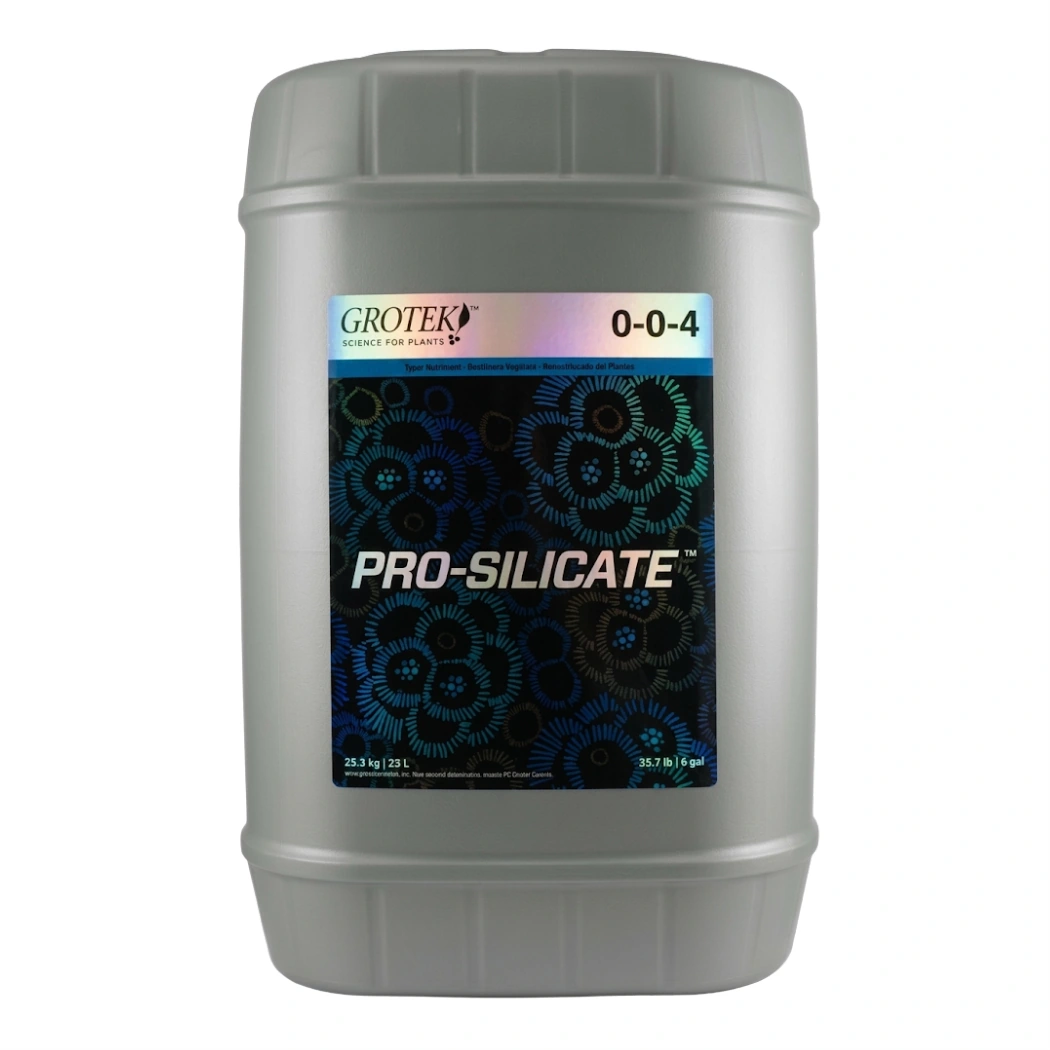
The guaranteed analysis carries exactly one number: 4.0% soluble potash. There is no silicon percentage on it, which is worth knowing on a product named after silicate. What the label does declare is the source. Grotek Pro Silicate is derived from potassium silicate and potassium chloride, and the potassium silicate is where both elements come from. So the 0-0-4 on the front describes the potash only. The silicon is real and it is the reason the product exists, but it is not a figure you can compare against a rival label.
Mixing Pro Silicate Without Crashing Your Reservoir
This is the part the current page leaves out entirely. Pro-Silicate is a strong base and must never go into nutrient concentrates. Add it to the tank of water first, before anything else. Then check pH and bring it to between 5.5 and 6.5, agitate the tank, and only then add the rest of the program. Reverse that sequence and the silicate reacts with concentrated calcium and phosphate, then drops out as a gel you cannot redissolve. The rate itself is small: 2.5 to 5 mL per 4 L of water, or half to one teaspoon per gallon.
Key Features
- 4.0% soluble potash, guaranteed: The one declared figure on the label. No silicon percentage is published, which is unusual on a silicate product and worth saying plainly.
- Derived from potassium silicate: Potassium chloride makes up the rest. Both are named on the label rather than hidden behind a proprietary blend.
- 2.5 to 5 mL per 4 L of water: Half to one teaspoon per gallon. One rate covering soil, soilless and water culture.
- Goes in the tank first: Before nutrients, never into concentrates. This is the single instruction that decides whether it works or gels.
- pH to 5.5 to 6.5 after adding: A potassium silicate lifts reservoir pH sharply. Correct it before the rest of the program goes in.
- Developed for soilless and hydroponic systems: Grotek's own positioning: media where potassium and silicon may not be present to begin with.
- Three tank sizes: 4 L, 10 L and 23 L, so the same concentrate scales from one room to a full facility.
- Very high dilution: A 4 L jug makes 3,200 to 6,400 L of finished solution depending on which end of the rate you run.
Technical Specifications
| Specification | Value |
|---|---|
| Guaranteed Analysis | 0 - 0 - 4 |
| Soluble Potash (K2O) | 4.0% |
| Silicon Content | Not declared on the guaranteed analysis |
| Derived From | Potassium silicate, potassium chloride |
| Format | Liquid concentrate |
| Application Rate | 2.5 - 5 mL per 4 L of water (0.5 - 1 tsp per gallon) |
| Dilution Range | 0.625 - 1.25 mL per litre |
| Mixing Order | Add to the water tank BEFORE other nutrients. Never add to concentrates. |
| pH After Addition | Adjust to 5.5 - 6.5, agitate, then add nutrients |
| Chemistry Note | Strong base |
| Systems | Soil, soilless media and recirculating hydroponics |
| Role | Additive, not a base nutrient |
| Sizes Stocked | 4 L, 10 L, 23 L |