


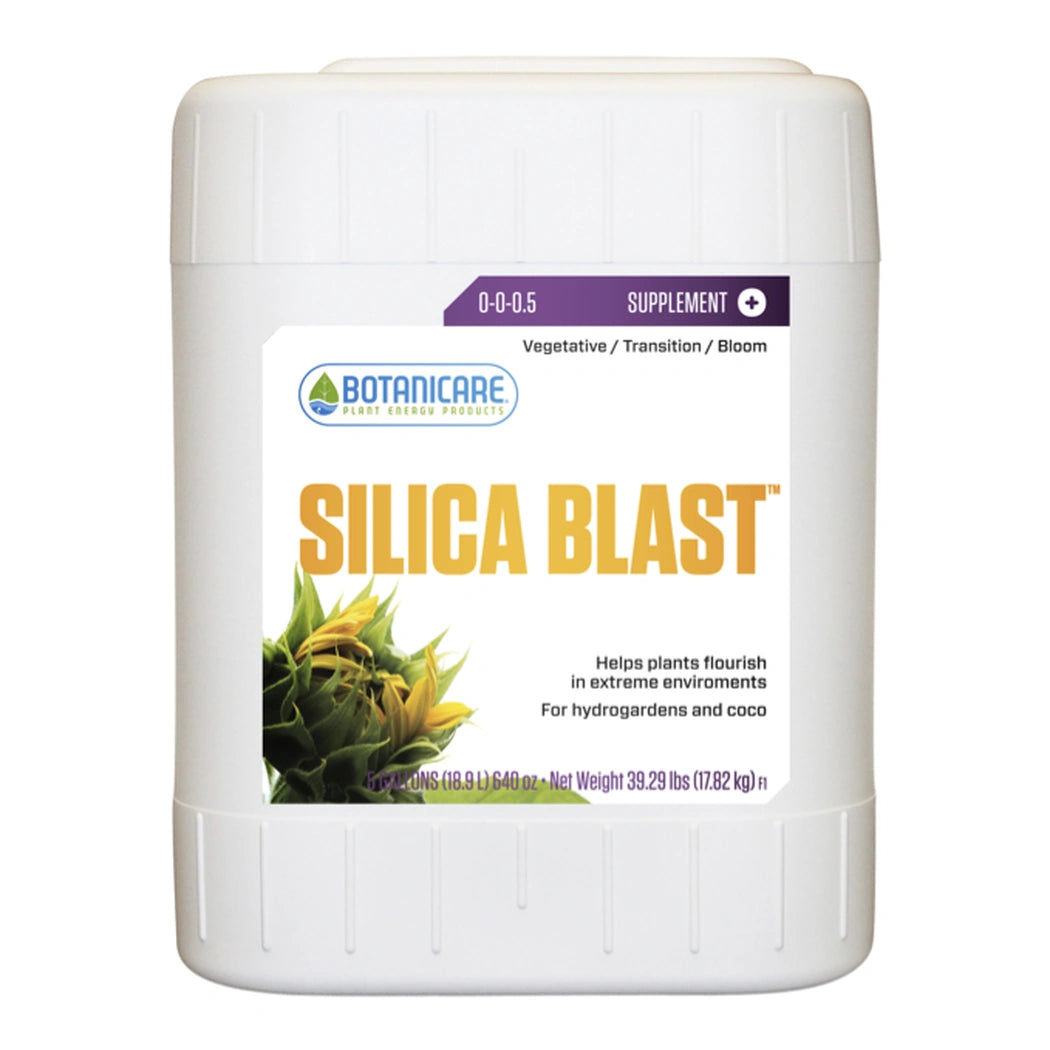
Silica Blast For Plants Runs 2.5 To 5 mL Per Gallon
Silicon taken up from this bottle binds into plant tissue within 24 hours, and once it is there it does not move again. Botanicare Silica Blast carries it as potassium silicate at 1.0% soluble silicon, which is close to 2% expressed as silica. The guaranteed analysis is 0-0-0.5. The only nutrient it adds to a feed is half a percent of soluble potash, which matters in flower when potassium is already climbing. Cell walls stiffen and transpiration drops. Leaves keep photosynthesising through heat that would otherwise stall them, and stems carry weight they would otherwise lean under.
Botanicare Silica Blast Rates In Soil, Coco And Reservoirs
Soil and soilless containers take half a teaspoon to a teaspoon per gallon, or 2.5 to 5 mL, at every watering or every other one. Reservoirs are dosed by plant size instead. Mid-size plants get 2.5 mL per gallon and mature plants get 5 mL, refreshed every five to seven days. Add it to plain water on its own, ahead of base nutrients, because a silicate dropped into an already mixed tank can cloud it. Then reset pH to 6.0. Potassium silicate is alkaline and it will push a reservoir up before it settles. One honest note on strength. At 1.0% soluble silicon this is a dilute silicate. That is why the rate here is 2.5 to 5 mL per gallon where a concentrate asks for 1 to 2.
Key Features
- 1.0% soluble silicon from potassium silicate: Roughly 2% when the same silicon is expressed as silica, so the two label conventions describe one product.
- 0-0-0.5 guaranteed analysis: Half a percent of soluble potash is the entire nutrient load, which keeps it out of the way of a bloom feed.
- 2.5 to 5 mL per gallon, soil and hydro: One rate range covers container gardens, coco and recirculating reservoirs without a separate chart to follow.
- Bound into tissue within 24 hours of uptake: The silicon deposits into cell walls and stays there, so the effect accumulates across a cycle instead of washing out.
- Reservoir dosing every 5 to 7 days: A published top-up interval for recirculating systems rather than guesswork between changes.
- Heat, drought and frost tolerance: Stiffer cell walls cut transpiration, which is what keeps photosynthesis running when room temperature climbs.
Technical Specifications
| Specification | Value |
|---|---|
| Guaranteed Analysis | 0 - 0 - 0.5 |
| Soluble Potash (K2O) | 0.5% |
| Soluble Silicon (Si) | 1.0% (approximately 2% as silica) |
| Derived From | Potassium silicate |
| Soil / Soilless Rate | 1/2 - 1 tsp (2.5 - 5 mL) per gallon, every or every other watering |
| Hydroponic Rate, Mid-Size Plants | 1/2 tsp (2.5 mL) per gallon |
| Hydroponic Rate, Mature Plants | 1 tsp (5 mL) per gallon |
| Reservoir Interval | Every 5 - 7 days |
| Mixing | Add to plain water alone, before base nutrients |
| Effect on pH | Alkaline. Reset reservoir pH to 6.0 after adding |
| Uptake | Bound in plant tissue within 24 hours |
| Foliar Rate | None published by the manufacturer |
| Compatible Systems | Soil, soilless container, coco, recirculating hydroponics |
| Available Sizes Here | 1 gallon, 5 gallons |