
Sweeteners + Silicas
A silica additive stiffens stems and leaves so plants carry heavy flowers, and a sweetener gives root-zone microbes carbohydrates through bloom. Run potassium silicate in a hand-fed reservoir, silicic acid in automated fertigation, and a sweetener once flowers set.
-
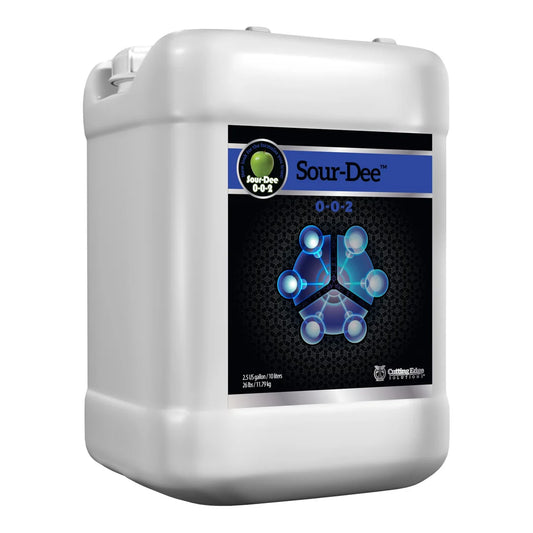
Cutting Edge Sour-Dee | 0-0-2, 2% Soluble Potash, Cane Sugar Feed
Vendor:Cutting Edge SolutionsRegular price From $70.51 USDRegular priceUnit price per -
Botanicare Silica Blast 2.5 Gallon | 0-0-0.5 Potassium Silicate, 1% Soluble Si
Vendor:BotanicareRegular price $84.37 USDRegular priceUnit price per



Sweeteners + Silicas
Silica Additives and Plant Sweeteners
A silica additive builds stronger cell walls and stems, while a plant sweetener feeds root-zone microbes with carbohydrates. This collection covers both, from potassium silicate and silicic acid to cane sugar and molasses blends. Not sure which silica fits your system? Start with our guide to silica for hydroponics....

For a narrower list, see our silica for plants page or the bud sweeteners page. Both sit inside the wider nutrients range.
Types of Silica and Sweeteners
Potassium Silicate
Botanicare Silica Blast, GH Armor Si, Cyco Silica, Grotek Pro-Silicate and Dyna-Gro Pro-TeKt are potassium silicates. They suit a hand-fed reservoir and have done the job for decades. All are alkaline, so add them to plain water first and reset pH. Pro-TeKt is the strongest at 7.8% silicon dioxide.
Silicic Acid and Dry Silica
PowerSi Original is stabilized monosilicic acid, and Elite 91 runs 4.1% silicic acid. With Ventana Commercial Silicon nanoparticles, they make the stronger case for automated fertigation or hard water. NPK RAW Silica is a 45% silicon dioxide powder, and PowerSi Granular top-dresses for up to 30 days.
Plant Sweeteners
Botanicare Sweet Carbo Raw adds carbohydrates and 1.5% magnesium at 8 mL per gallon. Cutting Edge Sugaree and Sour-Dee pair 2% potash with cane sugar and molasses. FoxFarm Bembe, Humboldt Honey ES, Technaflora Sugar Daddy and CarboLoad round out the range. Cyco Suga Rush holds no sugar; it is a light PK feed.
How Growers Use Silica and Sweeteners
Silica usually starts in veg, building stem strength before flower weight arrives. Most sweeteners are scheduled for bloom. Add silica first, then base nutrients, then the sweetener, and check pH last.
Frequently Asked Questions
Does silica raise pH?
Potassium silicate does. Botanicare says to reset reservoir pH to 6.0 after Silica Blast, and Grotek asks for 5.5 to 6.5 after Pro-Silicate. Silicic acid behaves differently: PowerSi Original does not raise water pH, and NPK RAW Silica is close to pH neutral.
Can you mix silica with other nutrients?
Yes, but the sequence matters. Add the silica additive to plain water and mix it in before anything else. Grotek warns that silicate meeting concentrated calcium and phosphate drops out as a gel. Never pour silica into nutrient concentrates, and Pro-TeKt needs its own line on a single-head injector.
Silicic acid vs potassium silicate: which is better?
It depends on the system. Potassium silicate is alkaline and has to convert before roots use it. Monosilicic acid is already the form plants absorb, held stable in PowerSi Original. Silicate suits a hand-fed reservoir, while silicic acid skips the pH correction and leaves no residue in drip lines.
Is sugar good for hydroponic plants?
Sweeteners feed root-zone microbes more than the plant itself. Cutting Edge labels the cane sugar in Sugaree as microbe food. Sugar also feeds organisms nobody wants, so use a formulated product at the label rate. FoxFarm asks for a reservoir flush every two weeks when running Bembe.