

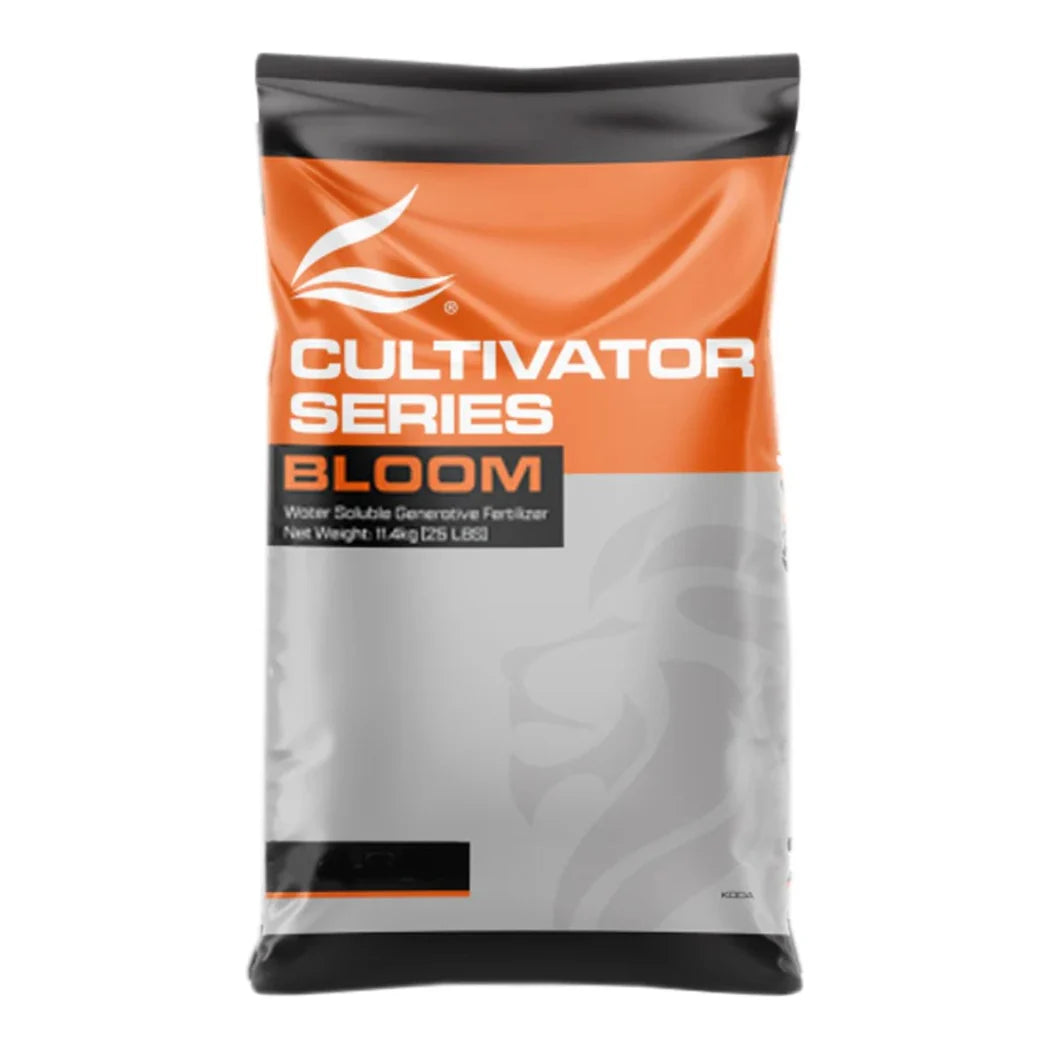
Reading the 3-13-26 on a Bag of Cultivator Series Bloom
Look at the analysis before anything else, because it explains the whole job this bag does. Potassium leads at twenty-six, phosphorus follows at thirteen, and nitrogen sits at three rather than zero. That small nitrogen figure is deliberate. A flowering plant still needs some, and stripping it to zero is what produces the pale, prematurely senescent canopy growers mistake for finishing early. The bag does not carry the calcium and the bulk of the nitrogen, though. That is the Base leg, which runs alongside it the whole way through flower. Treating this as a complete bloom feed is the single most common mistake with a three-part dry program. Raw inputs come from Haifa rather than commodity blenders, which is what keeps batch-to-batch analysis tight enough for a commercial room to trust. Everything dissolves fully, so injectors and drip emitters stay clear. And Advanced Nutrients states the formula contains no paclobutrazol and no daminozide, which is the sentence a testing lab cares about.
Where a Dry Bloom Fertilizer Beats a Bottled One
The rate climbs rather than holding flat. It enters the chart low as flower begins and reaches 6 g per gallon through the peak weeks. That crosses over the Base bag as it steps down. A 25 lb sack covers roughly 1,889 gallons at the peak rate and about 2,834 gallons at the lighter end. Those are real numbers to plan a room against. Because the product is dry, the freight on a season of feed is a fraction of what the same nutrition costs in jugs. Storage is the same story: one sack occupies the space three totes would. Advanced Nutrients quotes the full program at under four cents a gallon on a recurring agreement. Two honest cautions belong here. A dry program needs a scale, a mixing sequence and a stir, so a grower used to pouring capfuls will find the first week clumsy. And 26 percent potassium moves EC hard, so read runoff through the peak weeks rather than assuming the chart holds in your water.
Key Features
- Potassium-Led Analysis: At 3-13-26 potassium leads and phosphorus follows, with just enough nitrogen to keep the canopy from fading early.
- Climbs to Six Grams: The rate rises through flower to 6 g per gallon at peak, crossing over the Base bag as that one tapers.
- Runs With Base, Not Alone: Calcium and the bulk of the nitrogen come from the Base leg, which stays in the tank the entire cycle.
- Haifa Inputs: Raw salts are sourced rather than blended from commodity stock, which keeps batch analysis consistent.
- Fully Soluble: Complete dissolution keeps injectors, dosers and drip emitters clear through a commercial run.
- No Banned PGRs: The label carries no paclobutrazol and no daminozide.
- Freight and Storage: One 25 lb sack replaces the pallet space and shipping weight of the equivalent bottled nutrition.
- Program Economics: Advanced Nutrients quotes the three-part program at under four cents per gallon on a recurring agreement.
Technical Specifications
| Specification | Value |
|---|---|
| Guaranteed Analysis | 3-13-26 |
| Role in Program | Flowering leg, used with Base through bloom |
| Form | Water-soluble powder |
| Bag Size | 25 lb |
| Peak Rate | 6 g per gallon |
| Coverage at Peak Rate | Approximately 1,889 gallons per bag |
| Pairs With | Cultivator Series Base throughout flower |
| Inputs | Sourced from Haifa |
| Plant Growth Regulators | None; no paclobutrazol or daminozide |
| UPC | 845268015591 |