

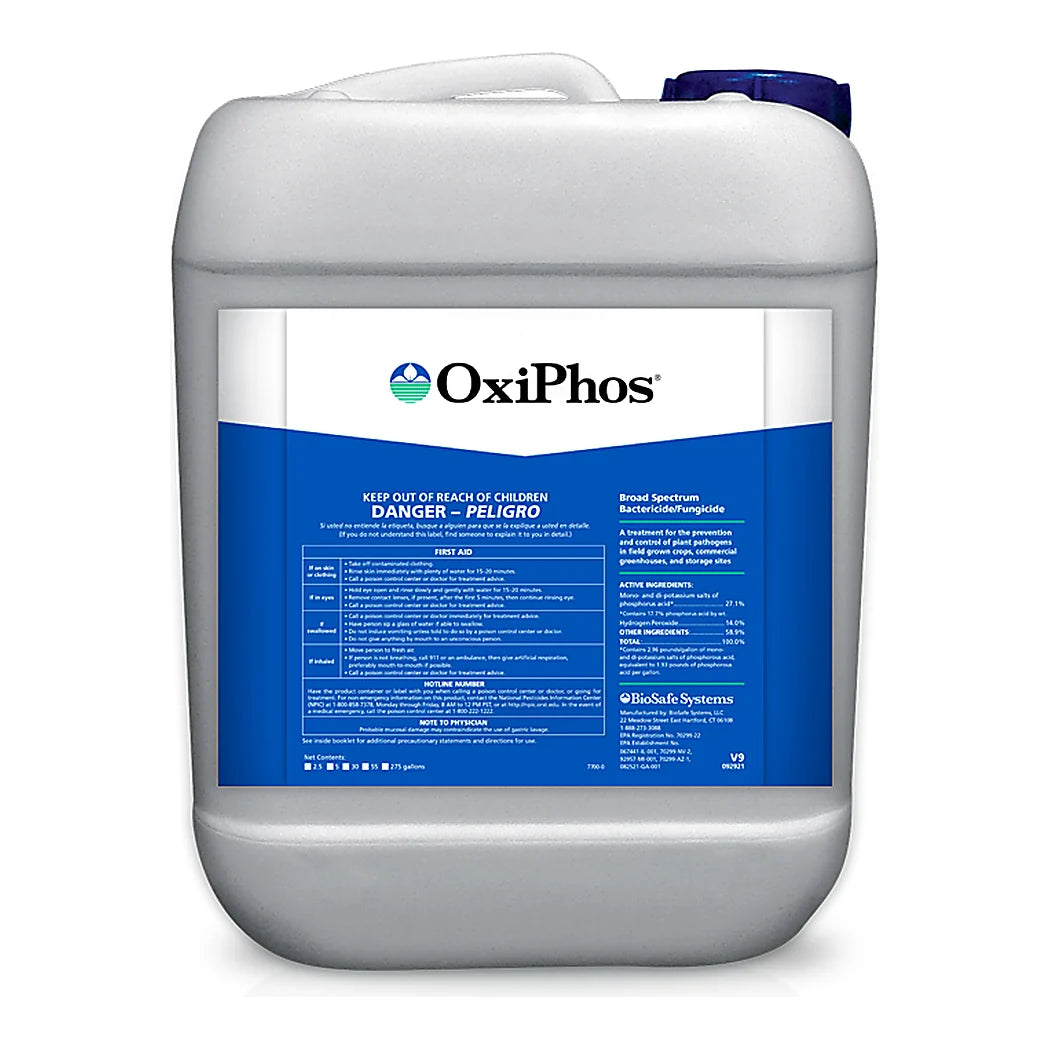
BioSafe OxiPhos Phosphite and Peroxide Bactericide
BioSafe OxiPhos pairs two actives that work in different ways. Mono- and di-potassium salts of phosphorus acid make up 27.1%, supplying 17.7% phosphorus acid by weight. Hydrogen peroxide adds another 14.0% for a fast oxidizing kill on contact. Each gallon carries 2.96 lb of the phosphite salts, equal to 1.93 lb of phosphorus acid. Greenhouse and nursery targets include downy mildew, Phytophthora and Pythium blights, and root and crown rot. Bacterial blight and bacterial leaf spot are labeled too, and the crop tables add powdery mildew. The label covers ornamentals, bedding plants, turf, nursery stock and greenhouse food crops, indoors or out. Re-entry is 4 hours after sprays, or zero hours for chemigation, dips, drenches and seed treatment. The pre-harvest interval is zero days. The concentrate is corrosive and carries the Danger signal word. Handlers wear coveralls, rubber gloves, chemical-resistant footwear and goggles or a face shield. It is registered under EPA number 70299-22. This 2.5 gallon jug suits greenhouses and nurseries running foliar and drench programs.
Greenhouse Rates for a Phosphorous Acid Fungicide
In greenhouses and nurseries, this phosphorous acid fungicide goes on at 1.3 to 4.0 quarts per 100 gallons of water. That is a 1:100 to 1:300 dilution, with the higher rate saved for severe pressure. Start at the first sign of disease and repeat every 7 to 14 days, wetting all foliage. Soil drenches take 12.8 to 25.6 fl oz per 100 gallons, applied at 1 to 2 pints per square foot. For transplants, dip roots for at least 30 seconds in 2.56 fl oz per 10 gallons. Cold foggers deliver 16 to 22 fl oz per 10,000 square feet of indoor plant area in 3 to 5 gallons of water. Plants in bloom should not get a fog stronger than 1:40. Some surfactants, foliar fertilizers and pesticides can cause crop injury when mixed in. Jar-test about a pint of spray with any partner and watch it for 5 to 15 minutes. Avoid spraying above 90°F, right after rain, or on heat or moisture stressed plants. Check a small test area 7 to 10 days later before treating everything.
Key Features
- Phosphite Plus Peroxide: 27.1% phosphorus acid salts and 14.0% hydrogen peroxide.
- Downy Mildew and Phytophthora: Labeled for downy mildew, Phytophthora and Pythium blights and rots.
- Bacterial Disease Control: Bacterial blight and bacterial leaf spot on ornamentals.
- Foliar, Drench, Dip or Fog: Four application routes from one concentrate.
- 0-Day PHI: Can be sprayed up to and including harvest day.
- Short REI: 4 hours after sprays, zero after dips and drenches.
- Indoor Fogging: Cold-fog rates for greenhouse and indoor plant areas.
Technical Specifications
| Specification | Value |
|---|---|
| Manufacturer | BioSafe Systems |
| Active ingredients | Mono- and di-potassium salts of phosphorus acid 27.1% (17.7% phosphorus acid); hydrogen peroxide 14.0% |
| Other ingredients | 58.9% |
| Phosphite content | 2.96 lb/gal of salts, equal to 1.93 lb/gal phosphorus acid |
| EPA Reg. No. | 70299-22 |
| Signal word | Danger |
| Restricted-entry interval | 4 hours; 0 hours for chemigation, dip, drench and seed treatment |
| Pre-harvest interval | 0 days |
| Greenhouse foliar rate | 1.3 to 4.0 qt per 100 gal (1:100 to 1:300), every 7 to 14 days |
| Soil drench | 12.8 to 25.6 fl oz per 100 gal, 1 to 2 pints per sq ft |
| Transplant dip | 2.56 fl oz per 10 gal, at least 30 seconds |
| Cold fog | 16 to 22 fl oz per 10,000 sq ft in 3 to 5 gal water |
| Fog limit in bloom | 1:40 |
| Field foliar rate | 2.5 to 5.0 qt per acre, not to exceed 2.5% v/v |
| Container size | 2.5 gal |