


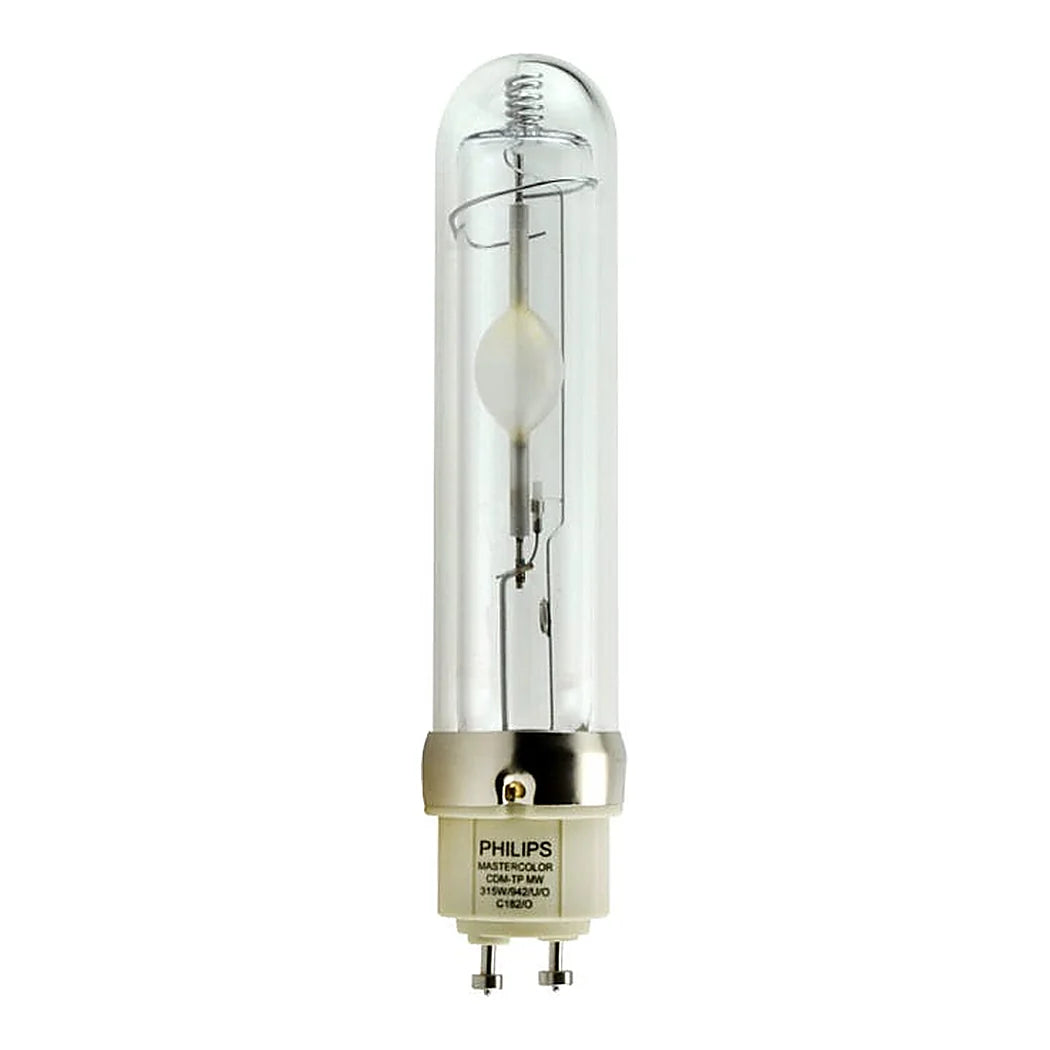
Gavita Pro 630e CMH With Two 315 W Lamps
This Gavita fixture runs two Philips 315 W CDM lamps from one housing, for 630 W of ceramic metal halide light. It draws about 660 W at full output on 208-240V, roughly 2.5 A at 240V. Two lamp versions are listed: 3100K, a warm spectrum for flowering and full-cycle rooms, and 4200K, a cooler spectrum for vegetative growth and supplemental light. With the 3100K Agro lamps, the system reaches up to 1.9 µmol per watt. The lamps sit under an M132 SE CMH630 reflector with a medium 132-degree beam. Gavita rates that reflector at over 90% uniformity across the crop, with good sideways penetration into the canopy. It is formed from Miro aluminum and clips straight onto the ballast housing. Inside is a double ballast, so the fixture can switch off one lamp when dimmed low or during an autodim event. It alternates which lamp goes dark each time, which keeps burning hours even and light balanced on the crop. The ballasts are sealed in an aluminum housing and cooled passively, with no fan. A Repeater Bus cable comes with every fixture for daisy-chaining to a Gavita Master Controller. One EL2 controller runs up to 1,000 fixtures, and the fixture is FCC tested and compliant.
Laying Out Dual 315 CMH Fixtures in a Room
A dual 315 CMH fixture spreads two light sources across a wider footprint, which helps even out the canopy. The medium beam angle is meant for rooms lit entirely with CMH, where neighbouring fixtures overlap. Lay fixtures out in a grid so the edges of each pattern blend with the next. Hang each one from its two balance points so it sits level over the bench. Start higher over young plants and lower the fixtures as the canopy fills in. A Master Controller handles scheduling, dimming and sunrise or sunset ramps from one place. The autodim feature also steps output down if room temperature climbs past the set limit. Ceramic metal halide gives broad, natural-looking light, so leaf color and pest damage are easy to read during walk-throughs. Many growers run the cooler lamps in veg and move to the warmer ones in flower. Keep space above the housing for heat to rise and clear, since cooling is passive. Wipe the reflector every few cycles. Dust on it costs light. Replace both lamps together on the maker's schedule so the pair stays matched.
Key Features
- Two 315 W CDM Lamps: 630 W of ceramic metal halide light from one compact housing.
- 3100K or 4200K: A warm flowering spectrum or a cool vegetative spectrum.
- M132 SE Reflector: Medium 132-degree beam in Miro aluminum, rated over 90% uniformity.
- Double Ballast: Switches off one lamp when dimmed low and alternates lamps to even out wear.
- Passive Cooling: Sealed aluminum ballast housing with no fan or moving parts.
- Master Controller Ready: Repeater Bus cable included for scheduling, dimming and autodim.
Technical Specifications
| Specification | Value |
|---|---|
| Item numbers | 906053 (3100K), 906054 (4200K) |
| Lamps | 2 x Philips 315 W CDM, 3100K or 4200K |
| Lamp base | PGZX18 |
| Input power | 660 W at full output |
| Input voltage | 208-240V |
| Input current | 2.5 A at 240V |
| Growth phase | 3100K: flowering and full cycle; 4200K: vegetative and supplemental |
| Efficacy | Up to 1.9 µmol/W (3100K), 1.7 µmol/W (4200K) |
| Reflector | M132 SE CMH630, medium 132-degree beam, Miro aluminum |
| Uniformity | Over 90% |
| Ballast | Double ballast, single-lamp switch-off with alternation |
| Cooling | Passive, sealed aluminum housing |
| Control | Repeater Bus; Gavita Master Controllers (up to 1,000 fixtures on EL2) |
| Mounting | Two-point hanging |
| Compliance | FCC tested and compliant |
| UPC | 849969033373 (3100K); 849969033380 (4200K) |