


General Hydroponics TriShield Kills Mites, Insects and Their Eggs on Contact
TriShield is a 3-in-1 contact spray that works as an insecticide, a miticide and a powdery mildew fungicide from one jug. Three food-crop ingredients carry the load: soybean oil at 30%, sodium lauryl sulfate at 7.5% and citric acid at 0.15% by weight. Nothing moves through the plant, so the spray kills what it physically touches and nothing else. The label covers two-spotted spider mites, russet and broad mites, green peach and foxglove aphids, thrips, whiteflies and caterpillars. It also kills insect and mite eggs, which breaks the hatch-and-reinfest loop that keeps spider mites coming back every few days. Shake the jug hard, mix 45 mL (1.5 fl oz) per gallon of water, and expect a little foam in the tank. Spray every 7 days for maintenance and every 4 days under moderate pressure. When mites explode or mildew needs curing, spray once a day for three days in a row each week. Wet the leaves to the dripping point and work the nozzle under the canopy, because coverage is the whole game with a contact product. In a tent, dim the heat-producing lights during the spray and bring them back up once the leaves are dry. Hold off when the room runs above 90°F, and stop hemp applications after the second week of flowering. Test a few leaves first on unfamiliar varieties. Broccoli, cabbage, cauliflower, Japanese holly, red cedar and smoke tree are on the label's do-not-spray list.
Sizing a Fungicide Concentrate to Your Spray Program
Every container holds the same concentrate, so the size choice comes down to how much canopy you treat and how fast you use it. The 8 oz bottle makes 5 gallons of spray, enough for a tent, a mother-plant shelf or a quick spot treatment. A quart makes 21 gallons and is the size most home growers keep on the shelf for a full season. The gallon jug makes 84 gallons, which suits a small room or a greenhouse bench on a weekly preventive schedule. The 6 gallon container makes about 500 gallons and belongs in facilities running backpack or cart sprayers several times a week. Plan on roughly one gallon of mixed spray for every 500 sq ft of canopy when you size a room. Mixed solution holds its strength for about a week, so batch only what the next few sprays need and shake the sprayer as you go. TriShield also works as a dip for unrooted cuttings at a lighter rate, used once per cutting before it goes into the plug. Keep it out of tank mixes with other insecticides or fungicides, and never run it through drip or fertigation lines. As a FIFRA 25(b) minimum-risk pesticide it is exempt from EPA registration, though many states still register these products individually. Store the concentrate cool, tightly capped and away from frost.
Key Features
- Three contact actives: Soybean oil, sodium lauryl sulfate and citric acid kill on contact with no systemic movement in the plant.
- Egg kill: Insect and mite eggs are on the label, so the next hatch does not restart the infestation.
- Broad pest label: Spider, russet and broad mites, aphids, thrips, whiteflies and caterpillars are all covered by one product.
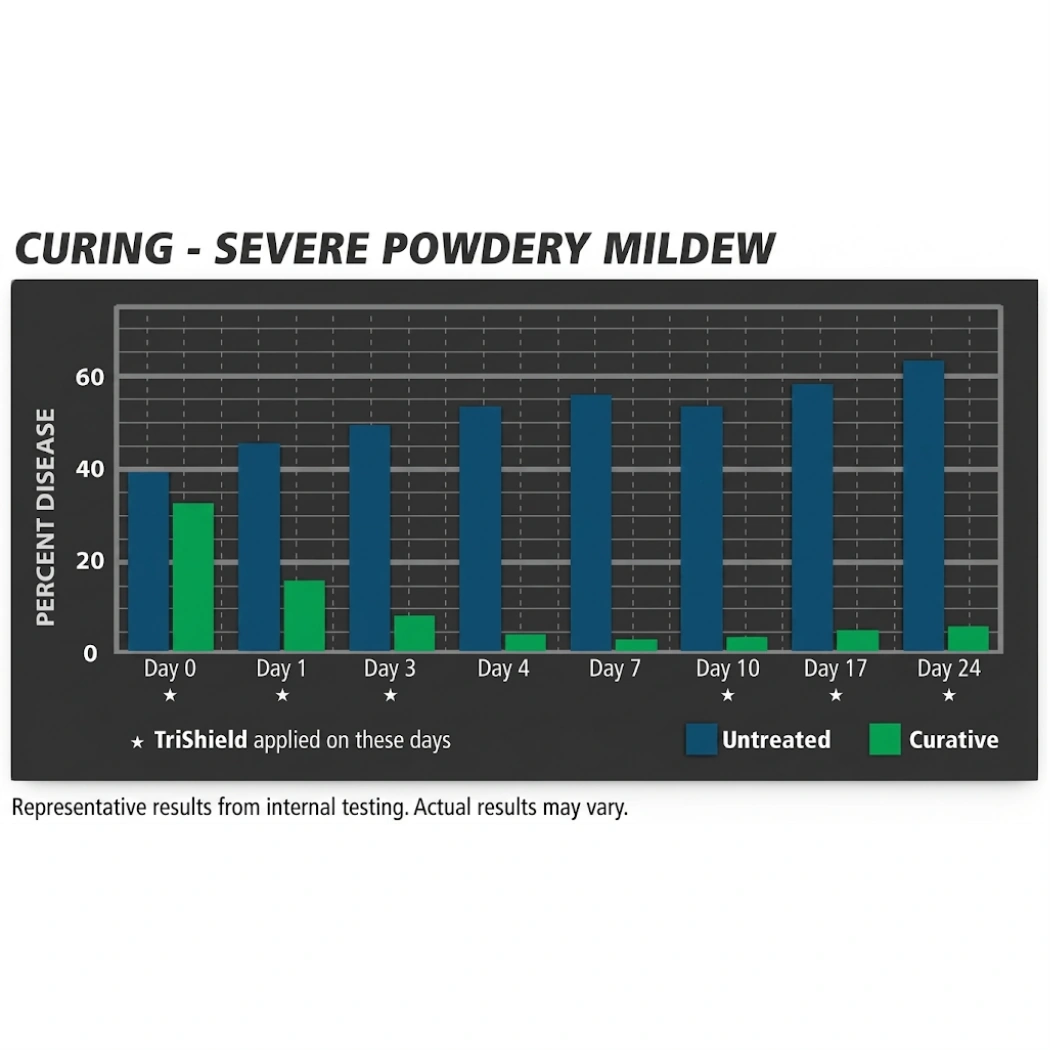
- Powdery mildew on hemp: It works as a 7-day preventive spray and as a three-day curative program on active infections.
- Cutting dip: A lighter dip rate treats unrooted cuttings for listed pests before they go into the plug tray.
- FIFRA 25(b) minimum risk: The formula is exempt from EPA registration and built on ingredients approved for food crops.
- Four sizes, one formula: The 8 oz, quart, gallon and 6 gallon containers make from 5 up to 500 gallons of spray.
- Indoor or outdoor: The label covers hemp, vegetables and ornamentals in tents, greenhouses, rooms and open fields.
Technical Specifications
| Specification | Value |
|---|---|
| Brand | General Hydroponics |
| Product Type | Insecticide, miticide and fungicide concentrate |
| Active Ingredients | Soybean oil 30.00%, sodium lauryl sulfate 7.50%, citric acid 0.15% (by weight) |
| Inert Ingredients | 62.35%: water, sodium benzoate, tripotassium citrate monohydrate, potassium sorbate |
| Mode of Action | Contact |
| Target Pests | Two-spotted/red spider mites, russet mites, broad mites, green peach and foxglove aphids, thrips, whiteflies, caterpillars, insect and mite eggs |
| Target Disease | Powdery mildew on hemp (preventive and curative) |
| Approved Crops | Hemp, vegetables and ornamentals, indoors and outdoors; cuttings via dip |
| Foliar Rate | 45 mL (1.5 fl oz) per gallon of water |
| Cutting Dip Rate | 15-30 mL per gallon; immerse at least 5 seconds; once per unrooted cutting |
| Spray Interval | Every 7 days maintenance; every 4 days moderate pressure; daily for 3 consecutive days per week for high pressure or curative mildew control |
| Hemp Cutoff | Do not treat past the second week of flowering |
| Mixed Spray | Use within 1 week; shake occasionally |
| Sizes and Yield | 8 fl oz (236 mL) makes 5 gal; 1 qt (946 mL) makes 21 gal; 1 gal (3.78 L) makes 84 gal; 6 gal (22.7 L) makes 500 gal |
| Item Numbers | HGC00015 (8 oz), HGC00016 (1 qt), HGC00017 (1 gal), HGC00019 (6 gal) |
| UPC 8 oz | 793094000154 |
| UPC 1 Quart | 793094000161 |
| UPC 1 Gallon | 793094000178 |
| UPC 6 Gallons | 793094000192 |
| Use Restrictions | Not above 90°F; not during rain or with rain expected within 24 hours; not through irrigation systems; no tank mix with other insecticides or fungicides; not on wilted or stressed plants |
| Sensitive Plants | Head, stem and leafy Brassicas (broccoli, cabbage, cauliflower), Chamaecyparis, Cryptomeria, Japanese holly, red cedar, smoke tree; may remove blue bloom from Colorado blue spruce and Koster spruce |
| Regulatory Status | FIFRA 25(b) minimum-risk pesticide, exempt from EPA registration |
| Signal Word | Caution (moderate eye irritation) |
| Concentrate pH | 5.4 |
| Relative Density | 0.98 |
| Flash Point | 201°F (94°C) |
| DOT Transport | Not regulated |
| Shelf Life | About 2 years unopened; best used within one growing season once opened |
| Storage | Original container, cool and dry, tightly closed; protect from freezing |
FAQs
How much TriShield do I mix per gallon of water?
Foliar sprays take 45 mL, or 1.5 fl oz, of concentrate per gallon of water. Cutting dips run lighter, at 15 to 30 mL per gallon. Shake the concentrate hard before measuring, and agitate the sprayer now and then while you work.
How many gallons of spray does each TriShield size make?
The 8 oz bottle makes 5 gallons, a quart makes 21 gallons and a gallon makes 84 gallons. The 6 gallon container makes about 500 gallons of finished spray. Those yields are all at the standard 45 mL per gallon foliar rate.
How often should I spray TriShield?
A 7-day interval covers maintenance and light pest pressure. Move to every 4 days once an infestation reaches moderate levels. Under heavy pressure, or to cure powdery mildew, spray once a day for three consecutive days each week. Stop right away if any leaf injury shows up.
Does TriShield kill spider mite eggs?
Yes, insect and mite eggs are listed targets on the label. That covers two-spotted spider mites as well as russet and broad mites, as long as the spray reaches them. Full coverage of leaf undersides and dense growth is what makes the egg kill count.
Can TriShield cure powdery mildew?
The label covers both prevention and cure of powdery mildew on hemp. Start preventively, or at the first white spots, on the regular 7-day schedule. For an established outbreak, switch to the curative program of one spray a day for three consecutive days per week.
Can I spray TriShield during flowering?
On hemp, the label stops treatment after the second week of flowering. On other crops, use care around open blooms and buds and test a few plants first. Steady scouting in veg keeps most problems from ever reaching flower.
Can TriShield be tank mixed with other pesticides?
No, the label says not to tank mix it with other insecticides or fungicides. When sulfur products are part of the program, follow both labels on compatibility and spacing. Apply it on its own as a foliar spray, never through an irrigation or fertigation line.
Which plants should not be sprayed with TriShield?
The label lists head, stem and leafy Brassicas such as broccoli, cabbage and cauliflower as sensitive. Chamaecyparis, Cryptomeria, Japanese holly, red cedar and smoke tree are on the same list. The oil can also strip the blue bloom from Colorado blue spruce, so test-spray first and wait several days.
Is TriShield registered with the EPA?
TriShield is a FIFRA 25(b) minimum-risk pesticide, which makes it exempt from federal EPA registration. Its ingredients are approved for use on food crops. Many states still register minimum-risk products individually, so check your state's list before use.
How long does mixed TriShield last, and how should it be stored?
Use diluted spray within one week and shake it occasionally to keep it blended. Keep the concentrate in its original container, tightly closed, in a cool and dry spot that never freezes. Unopened concentrate keeps for about two years, and an opened container is best used within one growing season.
Where can I download the TriShield SDS and label?
Download the TriShield safety data sheet (PDF) and the full TriShield label (PDF). The label carries every rate, restriction and first-aid step, and the SDS covers handling, storage and transport data. The TriShield brochure (PDF) adds the dilution chart and powdery mildew trial graphs.