


What GreenGro Rose & Flower Fertilizer 3-8-5 Is Made For
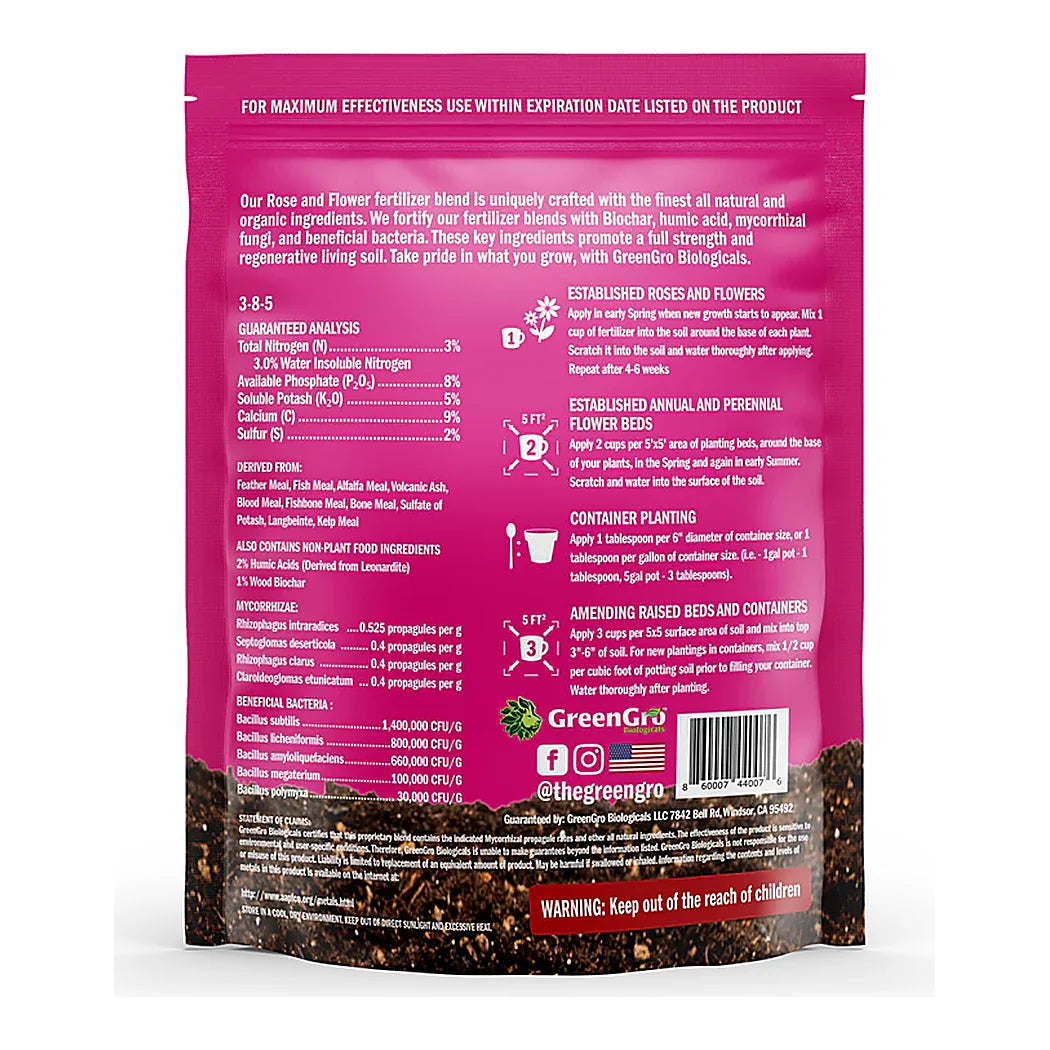
The analysis is 3-8-5, light on nitrogen and heavy on phosphate, which is the shape a flowering plant wants once it has built its frame. Phosphorus goes into bud set and root growth, the potash into stem strength and the colour and keeping quality of the bloom. The nitrogen is there to hold the foliage, not to push it. A rose fed on it does not throw soft red growth at the expense of the flowers. The three parts that make a GreenGro bag more than a bag of meal are the same in every size. Biochar is a charcoal with an open pore structure that holds water and nutrient in the root zone and gives soil microbes somewhere to live. Mycorrhizal fungi colonise the roots and extend their reach for water and phosphorus well past where the root hairs stop. A beneficial bacteria blend works the organic matter into forms the plant can take up. GreenGro calls the result regenerative living soil, and the idea is that each application leaves the bed more alive than it found it. The bag is OMRI listed for organic growing. It comes as a 4 lb bag, packed ten to a case, and a 10 lb bag, packed four to a case. The mix inside is the same. GreenGro's directions cover roses, other flowers, annuals and perennials, at planting or on established plants, in the ground or in containers. The schedule is every 4 to 6 weeks through the growing season, watered in well after each application.
Feeding an Organic Bloom Fertilizer With Biochar Through the Flowering Season
An organic bloom fertilizer with biochar does its work below ground first, and the timing of the first feed is what sets up the season. Put it down as the plant breaks dormancy or goes into the bed, scratched into the top inch and watered in. The meals are then breaking down by the time the first buds form. Feed roses again as the first flush fades. That is when the plant decides how much to put into the second flush. A repeat-flowering rose rewards a feed between flushes more than any other. Hold the 4 to 6 week interval through summer and stop six weeks before the first frost. A late feed pushes soft growth that the cold takes, and the bed is better going into winter hungry than lush. For annuals in containers, mix it into the potting soil at planting so the mycorrhizae meet the roots on day one. Then top-dress on the same interval. Water it in every time. Dry feather meal on a dry surface is just grit, and the bacteria blend does nothing until it is wet. Deadhead on schedule and the phosphorus goes into new buds rather than seed. Keep the biochar covered with mulch where the bed bakes, since a dry surface stalls the fungi it is there to house. Store the bag closed and cool. A bag left open in a greenhouse draws moisture, cakes, and loses the microbes it was bought for.
Key Features
- 3-8-5 bloom analysis: Low nitrogen, high phosphate, for bud set and colour.
- Biochar: Holds water and nutrient and houses the soil life.
- Mycorrhizae and beneficial bacteria: Extend root reach and release the meals.
- OMRI listed: For organic gardens.
- Roses, flowers, annuals, perennials: At planting or on established plants, in beds or containers.
- Schedule: Every 4 to 6 weeks through the season, watered in.
- 4 lb bag or 10 lb bag: Ten or four to a case.
Technical Specifications
| Specification | Value |
|---|---|
| Brand | GreenGro Biologicals |
| Product | GreenGro Rose & Flower Fertilizer |
| Analysis | 3-8-5 |
| Form | Dry granular, organic |
| Biologicals | Biochar, mycorrhizal fungi, beneficial bacteria blend |
| Listing | OMRI listed |
| Use | Roses, flowering plants, annuals, perennials; beds and containers |
| Application | At planting or on established plants; every 4 - 6 weeks in season; water well |
| Sizes | 4 lb bag (R&F-4, UPC 860007440076, 10 per case); 10 lb bag (R&F-10, UPC 860009711310, 4 per case) |
| Storage | Closed, cool, dry |