


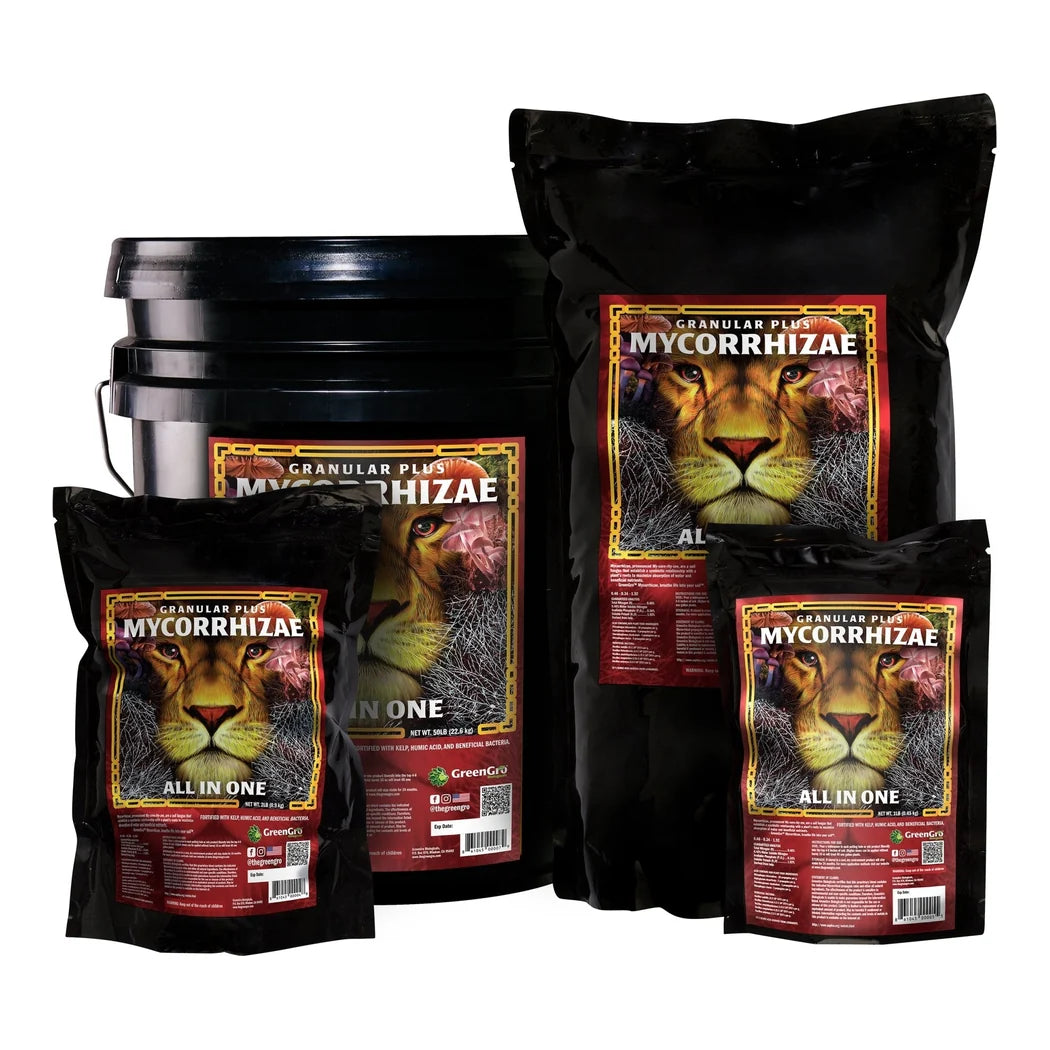
How Granular Plus Mycorrhizae Works in the Planting Hole
This is a dry, granular root inoculant that goes into the soil once and keeps working through the season. Four endomycorrhizal species carry the load, led by Glomus intraradices at 100 spores per gram. Glomus deserticola, Glomus etunicatum and Glomus clarum follow at 25 spores per gram each. Five Bacillus strains ride along, headed by Bacillus subtilis at 15×10⁹ CFU per gram. Kelp and 10% humic acid round out the blend, and the small guaranteed analysis sits at 0.46-0.34-1.92. At transplant, pour about 1 tbsp into each hole so the granules sit directly against the root ball. For beds and containers, mix it through the top 4–6 inches of soil before planting. Fungi need living roots to colonize, so it works best in the hole rather than scattered on the surface. One application at transplant is generally enough for the season. Water it in well afterward. Kept cool and dry, the product stays viable for up to 24 months.
Choosing a Granular Mycorrhizal Inoculant Over a Soluble One
Granules suit soil growers, raised beds and anyone building a living soil mix. The fungi extend the effective root zone, which helps plants reach water and phosphorus they would otherwise miss. That often shows up as steadier growth after transplant and less wilting between waterings. Bacillus strains add a second layer of biology working in the root zone alongside the fungi. Kelp and humic acid feed that biology and help hold nutrients where roots can use them. The main limit is format: granules do not belong in drip lines, dosers or hydroponic reservoirs. GreenGro's Premium Ultrafine is the water-soluble sibling for those systems. High-phosphorus feeding also discourages mycorrhizal colonization, so heavy bloom boosters work against it. Fungicide drenches will knock the fungi back as well, so time any treatments carefully. The smallest bag covers a few dozen transplants, and the drum is for nurseries and farms planting by the thousand.
Key Features
- Four Endomycorrhizal Species: Glomus intraradices leads at 100 spores per gram, backed by three companion species.
- Five Bacillus Strains: Bacillus subtilis, licheniformis, amyloliquefaciens, megaterium and polymyxa colonize the root zone.
- Kelp and Humic Acid: Feed soil biology and help keep nutrients available around the roots.
- One Tablespoon per Hole: A single application at transplant carries through the season.
- Reduces Transplant Stress: A larger effective root zone helps plants settle in and cope with dry spells.
- Two-Year Viability: Stays viable for up to 24 months when stored cool and dry.
Technical Specifications
| Specification | Value |
|---|---|
| Total Nitrogen (N) | 0.46% |
| Available Phosphate (P2O5) | 0.34% |
| Soluble Potash (K2O) | 1.92% |
| Glomus intraradices | 100 spores per g |
| Glomus deserticola / etunicatum / clarum | 25 spores per g each |
| Bacillus subtilis | 15×10⁹ CFU per g |
| Bacillus licheniformis | 5.5×10⁹ CFU per g |
| Bacillus amyloliquefaciens | 3.75×10⁹ CFU per g |
| Bacillus megaterium | 6.25×10⁸ CFU per g |
| Bacillus polymyxa | 2.5×10⁸ CFU per g |
| Other Ingredients | Kelp, 10% humic acid |
| Rate | 1 tbsp per planting hole, or mixed into the top 4–6 in of soil |
| Coverage | 16 oz treats about 40 one-gallon plants |
| Sizes | 1 lb, 2 lb, 15 lb, 50 lb, 250 lb |

