


What GreenGro Tomato, Veggie & Herb Fertilizer 5-4-3 Is Made For
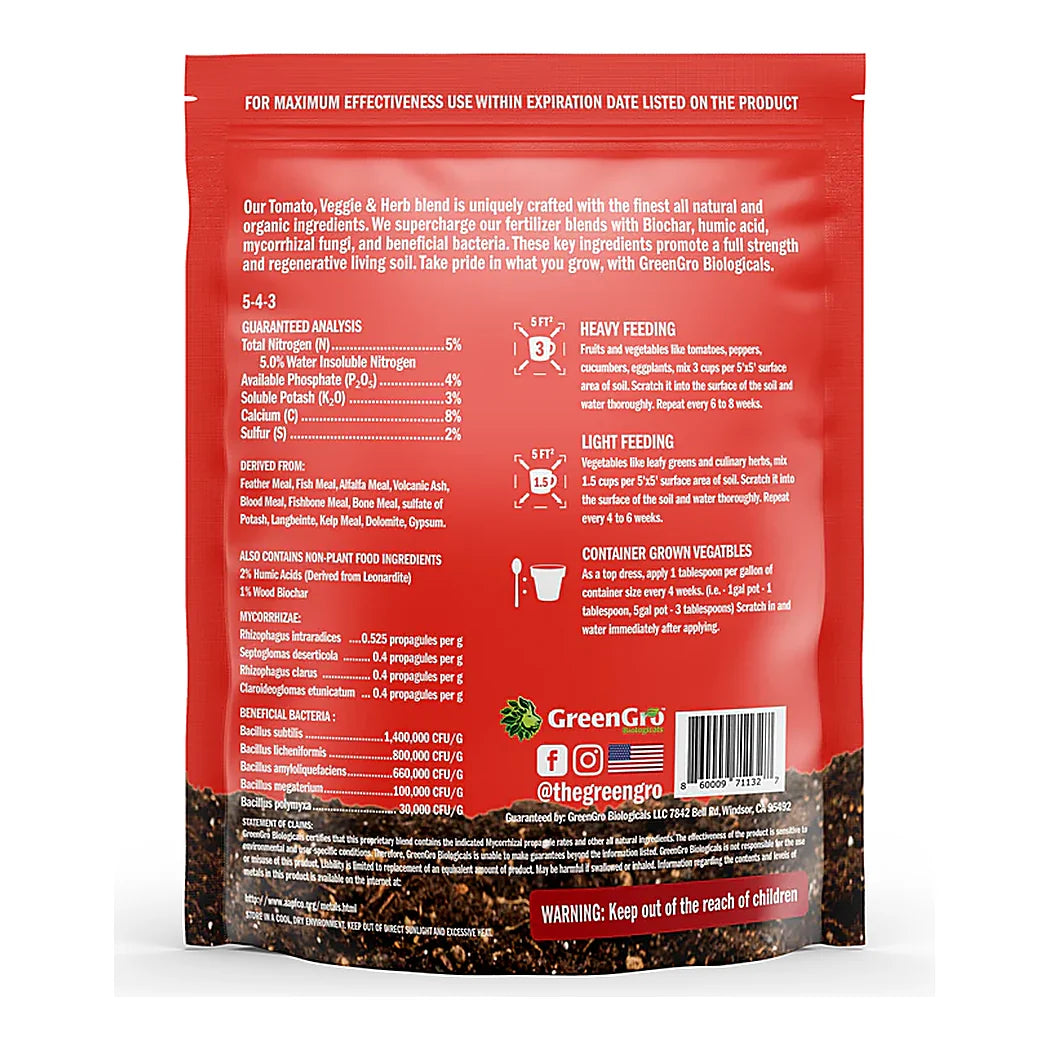
The analysis is 5-4-3, a little more nitrogen than phosphate and a little more phosphate than potash. That is the shape of a crop that has to grow leaves, then set fruit, then fill it. The nitrogen is organic, released by the soil life as it breaks the meals down. A tomato gets a steady supply through fruiting rather than a flush that splits the skins. It is safe to use right up to harvest. That is the difference between an organic meal and a salt or a spray with a withholding period. The three parts that make a GreenGro bag more than a bag of meal are the same in every size. Biochar is a charcoal with an open pore structure that holds water and nutrient in the root zone and gives soil microbes somewhere to live. Mycorrhizal fungi colonise the roots and extend their reach for water and phosphorus well past where the root hairs stop. A beneficial bacteria blend works the organic matter into forms the plant can take up. GreenGro calls the result regenerative living soil, and the idea is that each application leaves the bed more alive than it found it. The bag is OMRI listed for organic growing. It comes as a 4 lb bag, packed ten to a case, and a 10 lb bag, packed four to a case. The mix inside is the same. GreenGro's directions split the garden by appetite. Heavy feeders such as tomatoes, peppers, squash and corn get it every 6 to 8 weeks. Lighter feeders such as herbs, lettuce and beans get it every 4 to 6, watered in well each time.
Running an Organic Vegetable Garden Fertilizer From Transplant to Harvest
An organic vegetable garden fertilizer feeds the soil life that feeds the plant. The first application belongs in the planting hole, not on top of the bed. Mix it into the backfill and the bottom of the hole at transplant. The mycorrhizae then touch the roots on the first day and the biochar sits where the water collects. Water it in that evening. A dry granule of fish meal is inert until it is wet, and the bacteria blend wakes up with the first watering. Side-dress heavy feeders at the 6 to 8 week mark, in a ring at the drip line scratched into the top inch, rather than against the stem. The feeder roots of a tomato in midsummer are out at the edge of the canopy, not under the trunk. Herbs and salad greens get the lighter interval of 4 to 6 weeks and a lighter hand. Excess nitrogen makes a basil leafy and a lettuce bitter. Because it is safe up to harvest, feed the beds on the calendar and keep picking. There is no window to plan around. Hold off on synthetic salts between applications so the microbes that release the meals are not set back. Mulch the fed soil to keep the surface damp through July, since the fungi and the biochar only work in a moist root zone. Store the bag closed and cool. Fish and feather meal draw moisture and smell when they cake, and a dry bag in October is a usable bag in spring.
Key Features
- 5-4-3 for edible crops: Steady organic nitrogen for leaf, fruit set and fill.
- Safe up to harvest: No withholding period.
- Biochar: Holds water and nutrient and houses the soil life.
- Mycorrhizae and beneficial bacteria: Extend root reach and release the meals.
- OMRI listed: For organic gardens.
- Schedule: Every 6 to 8 weeks for heavy feeders; every 4 to 6 for light feeders.
- 4 lb bag or 10 lb bag: Ten or four to a case.
Technical Specifications
| Specification | Value |
|---|---|
| Brand | GreenGro Biologicals |
| Product | GreenGro Tomato, Veggie & Herb Fertilizer |
| Analysis | 5-4-3 |
| Form | Dry granular, organic |
| Biologicals | Biochar, mycorrhizal fungi, beneficial bacteria blend |
| Listing | OMRI listed |
| Use | Tomatoes, vegetables, herbs; beds and containers |
| Application | Heavy feeders every 6 - 8 weeks; light feeders every 4 - 6 weeks; water well |
| Harvest | Safe to apply up to harvest |
| Sizes | 4 lb bag (TVH-4, UPC 860009711327, 10 per case); 10 lb bag (TVH-10, UPC 860009711334, 4 per case) |
| Storage | Closed, cool, dry |