


1 Gallon Open Top Coco Bag Built for High-Frequency Drip
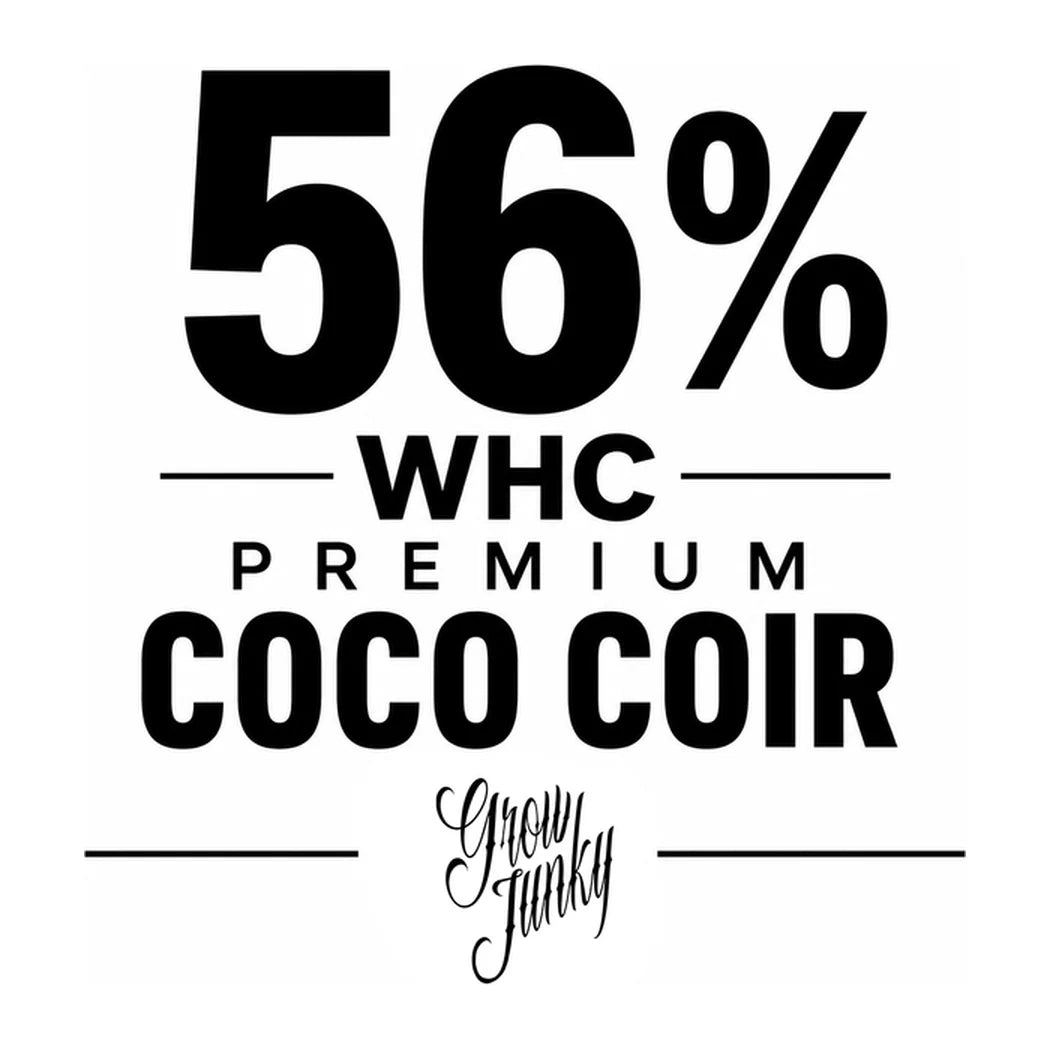
This one-gallon grow bag arrives pre-filled with coco and open at the top, ready for a drip stake or rockwool block. The blend mixes coco pith, coco chips and coco fibers to balance 56% water holding capacity against 38% air porosity. In practice the bag holds a steady water reserve between shots and still drains fast enough to pull fresh air back into the root zone. That balance matters most in a small container, where the media dries back quickly under strong light. Rooms running several short irrigation events a day get room to steer, with a wetter pattern in veg and longer drybacks once flower sets. The coir is washed five times and certified by OMRI, and every batch ships with a certificate of analysis. Each half pallet carries 1,393 bags, enough for a large propagation-to-veg cycle or a dense flowering table in one delivery. Pre-drilled holes in the bag take drip stakes, so the emitter goes in at the same depth on every plant. A net inside the base keeps loose coir in the bag and out of the drain lines. Hydrate each bag with pH-adjusted water, let it drain, and read runoff EC and pH before the first feed. Small containers forgive very little. A missed irrigation in a hot room stalls a plant in this size fast, so program the controller before the bags fill the room.
Where These Coco Coir Grow Bags Fit in a Commercial Room
The one-gallon size earns its place in three spots: veg transplants, mother stock, and sea-of-green flower tables packed with small plants. In veg, roots fill the bag quickly, which keeps the next transplant clean and predictable. In flower, a tight grid of small containers turns over faster than a few large pots and keeps plant height even across the canopy. A rockwool block can sit on the open surface, so plants rooted in cubes move across without disturbing the root ball. Because every container shares one size and one blend, a whole room dries back on a single schedule instead of a dozen. Coco brings almost no nutrition of its own, so feed from the first irrigation and keep calcium and magnesium in the mix. Set the bags on a raised tray or drain rail so the base never sits in standing runoff. A half pallet arrives as one heavy load, so clear floor space and keep a pallet jack ready. The bag itself is fully biodegradable, so spent containers and coir can go to compost together after harvest. For crews standardizing on one container, a single SKU this size keeps irrigation programs, runoff targets and labor identical across rooms.
Key Features
- 56% WHC, 38% air porosity: The blend holds a working water reserve while leaving enough air space to keep roots breathing between shots.
- Pith, chips and fibers: Three coco fractions build the structure, so the media drains evenly instead of slumping into a dense cake.
- Washed 5 times: Repeated washing pulls loose salts and fines before the coir is bagged.
- OMRI certified with batch COA: Every batch ships with a certificate of analysis, which makes media audits and records simpler.
- Pre-drilled drip-stake holes: Emitters seat at the same point on every bag, which keeps a large room's irrigation uniform.
- Bottom net inside the bag: Loose coir stays in the container instead of washing into trays and clogging drains.
- Half pallet of 1,393 bags: One delivery fills a full veg cycle or a dense flowering table with matching containers.
- 100% biodegradable bag: Spent bags and coir can go to compost together once the run ends.
Technical Specifications
| Specification | Value |
|---|---|
| Brand | Grow Junky |
| Media Blend | Coco pith, coco chips and coco fibers |
| Water Holding Capacity | 56% |
| Air Porosity | 38% |
| Washing | Washed 5 times |
| Certification | OMRI certified |
| Format | Pre-filled open top grow bag |
| Bag | 100% biodegradable, pre-drilled holes for drip stakes, bottom net inside the bag |
| Quality Control | Certificate of analysis (COA) with every batch |
| Container Size | 1 gallon |
| Quantity | 1,393 bags per half pallet |
| SKU | GJ561G |
FAQs
What do 56% WHC and 38% air porosity mean?
WHC is the share of the media's volume that still holds water after free drainage, and air porosity is the share left filled with air. At 56% and 38%, the bag keeps roots hydrated between irrigations without staying waterlogged. That ratio suits rooms that irrigate several times a day.
Is Grow Junky coco OMRI certified?
Yes, the coco blend is OMRI certified. Every batch also comes with a certificate of analysis, which helps with media records and audits.
How many bags are in one half pallet?
Each half pallet holds 1,393 one-gallon bags. That is enough to set a large veg cycle or a full sea-of-green flower table from a single delivery.
Do the bags need to be rinsed before planting?
The coir is washed five times before bagging, so heavy rinsing is not part of the routine. Hydrate each bag with pH-adjusted water, let it drain, and read the runoff EC and pH on a few bags. Those numbers set the starting point for the first feed.
How do drip stakes go into the bag?
The bag comes with pre-drilled holes for drip stakes, so emitters seat in the same spot on every container. One emitter per bag is the usual setup at this size, angled toward the center of the media.
Can rockwool cubes or blocks go straight into the bag?
Yes, the open top lets a rockwool cube or block sit right on the coir. Roots grow down into the bag without the plant leaving its cube, which keeps transplant shock low.
What stages suit the one-gallon size?
It works for rooted transplants heading into veg, for mother and cutting stock, and for sea-of-green flower tables. Plants that need to grow large through a long flower usually move on to a bigger container.
What happens to the bag after harvest?
The bag is 100% biodegradable, so spent containers and coir can be composted together. Reusing coir in a production room risks carrying root disease and salt build-up into the next run.