

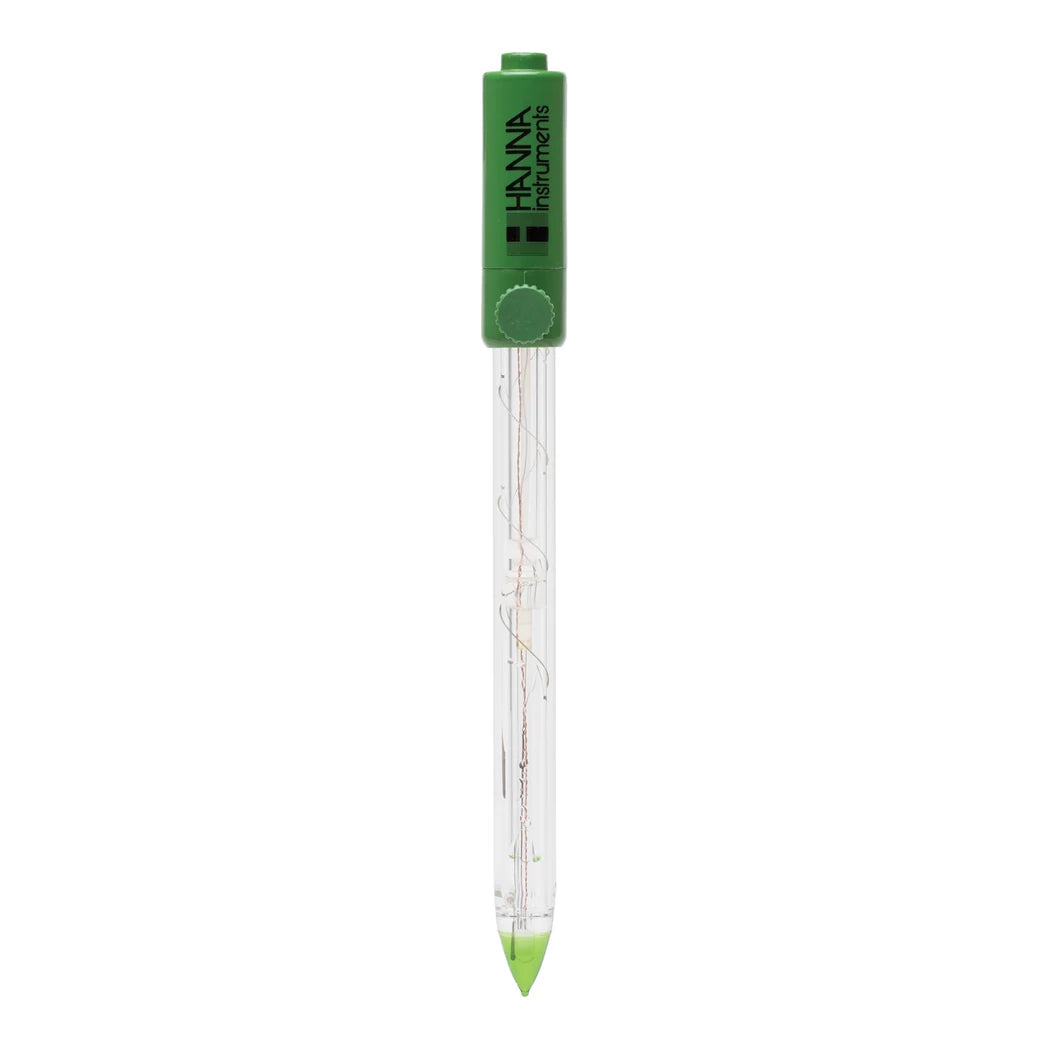
Hanna pH Electrode for Direct Soil Measurement in Beds and Containers
The HI12923 is a glass-body pH probe with a pointed tip that pushes straight into moist soil, compost or a soil slurry. It covers 0 to 12 pH and works from -5 to 70°C (23 to 158°F) thanks to low-temperature glass. The conic tip measures 12 x 12 mm, small enough to slip into a nursery pot without tearing roots. A triple ceramic junction lets electrolyte flow at 40 to 50 µL/h, which keeps the reference in contact with dense, damp media. The reference is a single Ag/AgCl cell, refilled with 3.5M KCl plus AgCl electrolyte (HI7071). Inside the body sit an amplifier and a temperature sensor, so the meter compensates automatically for cold or warm soil. The probe ends in a Quick DIN connector on a 1 m (3.3 ft) cable. Overall length is 175.5 mm, with a 12 mm outer diameter. Hanna pairs it with the HI99121 portable meter, and that is the meter it is built to plug into.
Getting Reliable Readings From a Soil pH Probe
Growers reach for this probe when a runoff test hints at a pH problem. It shows what is happening in the bed itself. Water the area or wait until after irrigation, because the probe reads best in moist soil. Push it in gently to the depth where most roots sit, then let the display settle before logging the value. Hard or compacted ground needs a pilot hole first, made with a soil auger or a thin rod. Stony ground is a poor match, since a glass body will crack against rock. Remove the fill cap before calibrating or measuring, so electrolyte can flow freely through the junction. Rinse the tip after each spot and wipe off any clinging soil. Between sessions, keep the tip wet in electrode storage solution rather than leaving it dry. Top up the electrolyte as the level drops, which keeps readings steady over a long season. Record the depth with each reading, since pH often shifts between the surface and the root zone. Checking several spots across a bench gives a far truer picture than one reading at the edge.
Key Features
- Conic penetration tip: The pointed glass tip enters moist soil and container media directly, so no sample needs to be collected or mixed.
- Triple ceramic junction: High electrolyte flow keeps contact with dense, damp soil and speeds up a stable reading.
- Built-in temperature sensor: Automatic temperature compensation keeps readings accurate in cold beds and warm greenhouses.
- Integrated amplifier: The amplifier protects the signal from noise on the cable, which steadies readings in humid rooms.
- Refillable glass body: Topping up the electrolyte extends probe life, and the smooth glass cleans off quickly.
- Quick DIN connector: Clicks into the HI99121 meter for fast swaps between probes in the field.
Technical Specifications
| Specification | Value |
|---|---|
| Part number | HI12923 |
| pH range | 0 to 12 pH |
| Operating temperature | -5 to 70°C (23 to 158°F) |
| Tip | Conic, 12 x 12 mm, low-temperature glass |
| Junction | Triple ceramic, 40-50 µL/h flow |
| Reference | Single, Ag/AgCl |
| Electrolyte | 3.5M KCl + AgCl (HI7071) |
| Body | Glass, refillable |
| Temperature sensor | Built in |
| Amplifier | Integrated |
| Connector | Quick DIN |
| Cable | 1 m (3.3 ft) |
| Dimensions | 175.5 mm overall length, 120 mm body, 12 mm OD |
| Max pressure | 0.1 bar |
| Recommended meter | Hanna HI99121 |