

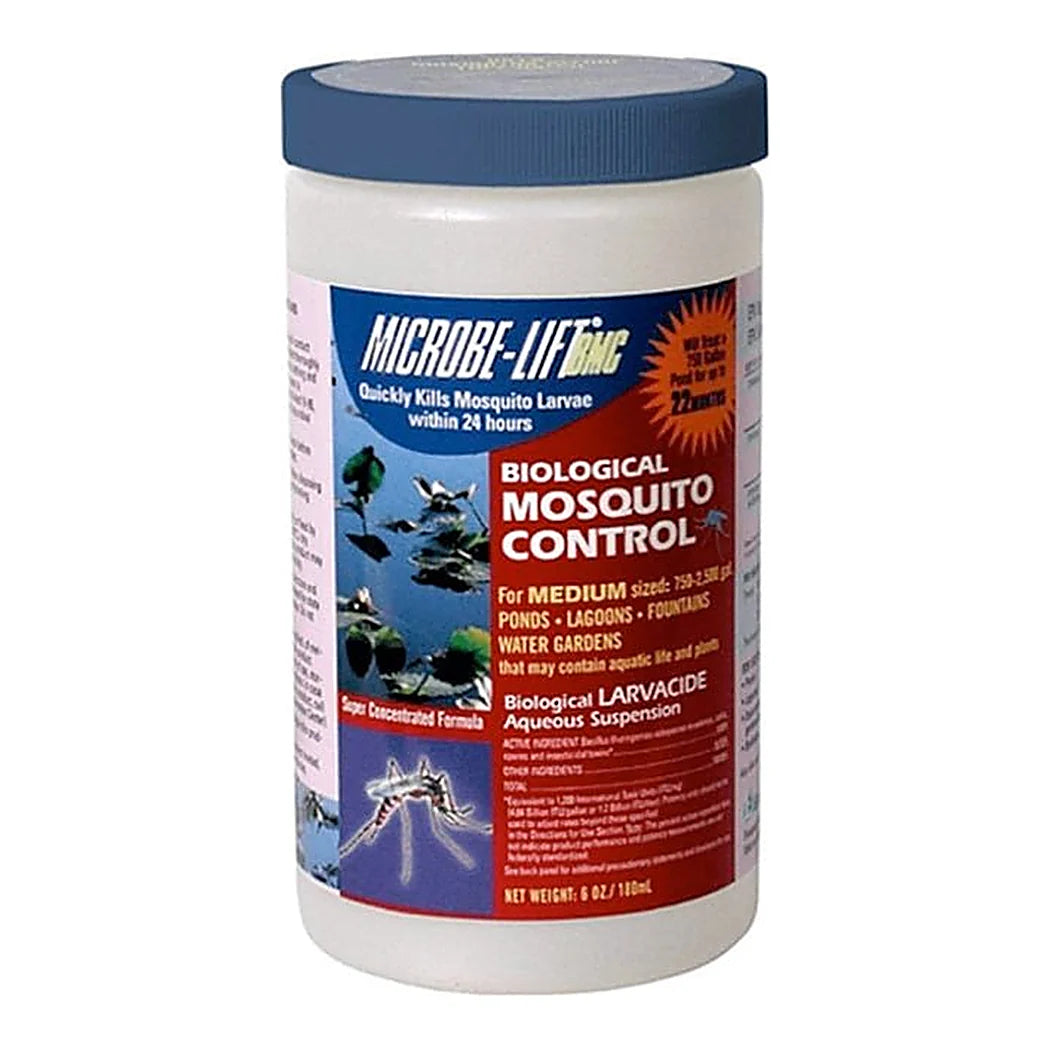
Biological Mosquito Control and the Reason It Only Hits Larvae
This is a bacterial product, not a synthetic one. The active ingredient is Bacillus thuringiensis subspecies israelensis, declared on the label as solids, spores and insecticidal toxins, at eight percent by weight. A larva feeding in the water column takes the material in, and the toxin then acts in its gut. Adult insects on the wing are untouched by it, which is the trade-off that comes with a larval product. Treating the water is therefore preventive work rather than a response to a swarm already flying. The label rate is 2.5 ml per thousand gallons of standing water every other week, doubling where two thousand gallons are being held. Weekly application is permitted where the pressure justifies it. Ecological Laboratories also give a surface figure of one teaspoon per five hundred and forty square feet of total water column. Each application stays active for up to fourteen days, with site conditions deciding the exact figure. The registration number is 62637-1-74466 and the product is made under establishment number 74466-FL-001. It disperses into the water instead of floating, and it leaves no organic or inorganic residue. It may be applied where aquatic life, fish and plants are present. Bacterial larvicides also carry a much lower resistance risk in target populations than chemical alternatives such as methoprene.
Sizing This Larvicide Against the Water You Actually Hold
Start with the volume rather than the bottle. This size holds about 177 ml and treats two thousand gallons across roughly sixteen months. Two thousand gallons takes 5 ml a fortnight, which is twenty-six doses and 130 ml in a full year. The bottle therefore covers sixteen months of continuous fortnightly treatment. Anyone running a smaller feature will get proportionally longer from it. The labelled sites run well past ponds. Water gardens, birdbaths, fountains and statuary open the list. Rain barrels, roof gutters, drains and buckets sit on it too. Plant trays, planters, pool covers, old tires, abandoned swimming pools and stock tanks finish it. Plant trays and planters appearing there is useful to know, since irrigation runoff standing in a saucer breeds as readily as a rain barrel does. Mosquito larvae are the only pest this registration covers, and drinking water sources are excluded. The signal word is CAUTION, and the label warns the material is harmful if inhaled or absorbed through skin. Avoid contact with skin, eyes and clothing when measuring. Keep it cool and dry between applications and do not reuse an empty container.
Key Features
- Active ingredient: Bacillus thuringiensis subspecies israelensis at eight percent
- Mode of action: Taken in by feeding larvae, then acting within the gut
- Registration: EPA registered under number 62637-1-74466
- Label rate: 5 ml per two thousand gallons every other week, weekly optional
- Surface rate: One teaspoon per five hundred and forty square feet of column
- Residual: Each application holds activity for up to fourteen days
- Rated coverage: Two thousand gallons, about sixteen months
- Water clarity: Disperses without residue and without clouding the water
- Resistance: Lower resistance risk than chemical larvicides such as methoprene
- Labelled sites: Planters and plant trays sit on the list beside ponds and gutters
Technical Specifications
| Specification | Value |
|---|---|
| SKU | 717499 |
| Brand | Microbe-Lift, from Ecological Laboratories |
| Product | BMC, the bacterial larvicide for standing water |
| Size | 6 fl oz, roughly 177 ml |
| Active ingredient | Bacillus thuringiensis subspecies israelensis, 8.00 percent |
| Form | Water dispersible liquid |
| Target pest | Mosquito larvae |
| EPA Reg. No. | 62637-1-74466 |
| EPA Est. No. | 74466-FL-001 |
| Signal word | CAUTION |
| Label rate | 2.5 ml per 1,000 gallons; 5 ml per 2,000 gallons, every other week |
| Surface rate | 1 teaspoon per 540 sq ft of total water column |
| Residual activity | Up to 14 days per application |
| Rated coverage | 2,000 gallons, up to 16 months of biweekly dosing |
| Labelled sites | Water gardens and features, birdbaths, fountains, old tires, statuary, drains, rain barrels, roof gutters, plant trays, buckets, planters, pool covers, abandoned swimming pools and stock tanks |
| Not for | Drinking water sources |
| Storage | Cool, dry place; empty containers are not to be reused |