

How a Tissueponics Starter Kit Replaces a Clone Dome
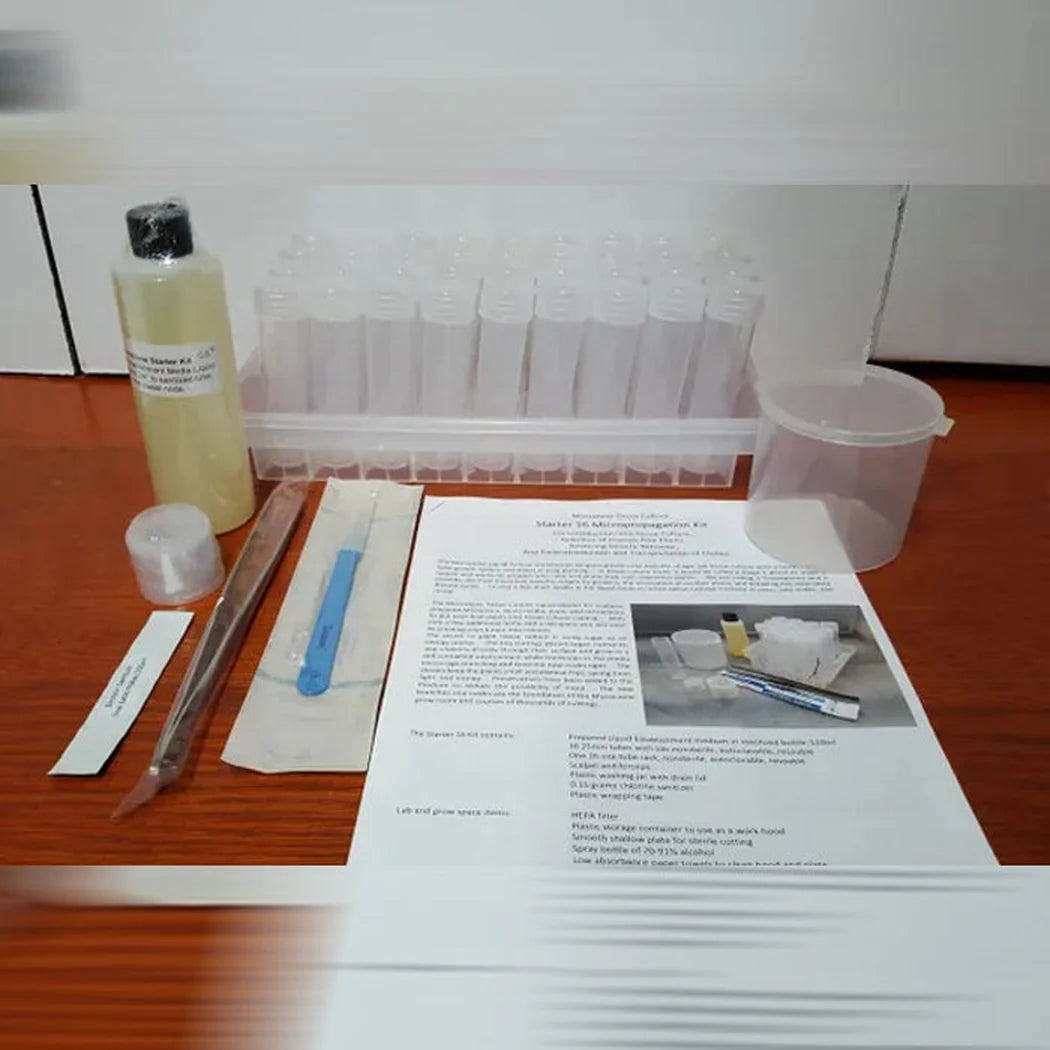
Tissue culture runs on sugar rather than light, which is the idea that makes the whole method work. A cutting placed in the prepared medium absorbs sugar, nutrients and hormones through its cut surface. The vessel is sealed, so nothing else reaches it. Hormones in that medium push branching rather than height, so the plant stays small and every node becomes a future cutting. The medium carries preservatives to hold mould back. The method runs to three steps. Trim limb tips from the strongest plants, place them into tubes of prepared liquid rooting medium, then move the rooted material into rooting plugs. microCLONE put three weeks on that cycle. The kit ships with a scalpel, eight inch forceps, sealing tape and an instruction manual alongside the tubes and medium.
Why 36 Culture Tubes Is the Right Starting Number
Scale is the thing to get right at the beginning, because contamination is a numbers game before it is a skill. A batch this size is large enough that losing a few vessels to mould is an inconvenience rather than the end of the genetics. It is also small enough to fit on one shelf and be checked daily without becoming a chore. It also sits in a reusable tray, so the footprint stays constant as batches rotate. Two things this kit does not remove. The glass tubes arrive non-sterile, which means a pressure cooker or an InstaPot is doing the sterilising before anything goes in them. The work itself needs a HEPA filter and a genuinely clean room with a lit shelf. A single airborne spore in an open tube ruins that tube. The dichlor is a surface sanitiser for the plant material, not a substitute for either of those.
Key Features
- Tubes: Thirty-six non-sterile glass culture tubes in a reusable tray
- Medium: Prepared sterile liquid tissue cloning medium, with preservatives
- Sanitiser: Dichlor surface sanitising solution for the plant material
- Tools: One stainless scalpel and one pair of eight inch forceps
- Also included: Sealing tape and a printed instruction manual
- Timeframe: Three weeks from a trimmed limb tip to a clean tissue clone
- Method: Sugar rather than light drives growth inside a sealed vessel
- Equipment needed: HEPA filter, clean lit shelf and a pressure cooker or InstaPot

Technical Specifications
| Specification | Value |
|---|---|
| SKU | PF1036 |
| Brand | microCLONE |
| Culture tubes | 36, glass, supplied non-sterile in a reusable tray |
| Medium | Prepared sterile liquid tissue cloning medium |
| Sanitiser | Dichlor surface sanitising solution powder |
| Dilution | 1 gram of dichlor powder to 1 litre of water |
| Scalpel | One stainless steel scalpel included |
| Forceps | One pair, 8 in |
| Sealing tape | Included, for sealing the tubes |
| Cycle time | About 3 weeks to a clean tissue clone |
| Light requirement | Fluorescent or LED shelf at about 6 W per square foot |
| Sterilising equipment | Pressure cooker or InstaPot, not included |
| Air handling | A HEPA filter is required and is not included |