


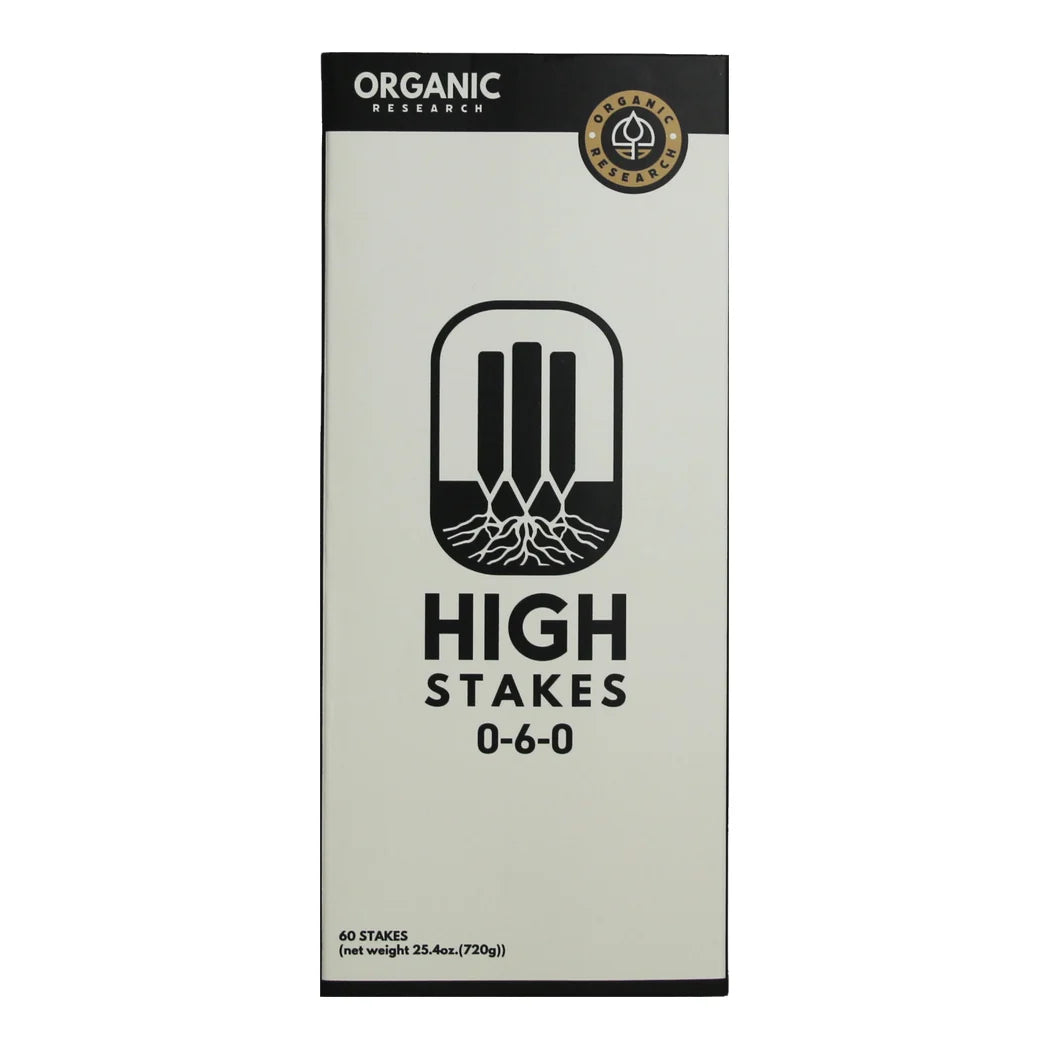
How Nutrient Stakes Work in a Pot
A stake is a solid feed that you push into the medium and then leave alone. Water moves through it, the material breaks down, and what it carries goes into the root zone over weeks rather than at every watering. That is a different proposition from a liquid programme and it suits different plants. Mother plants are the obvious one, because they sit in the same container for months and nobody wants to mix a tank for four pots. The same logic covers slow vegetative growth and anything living in soil rather than a recirculating system. What these carry is phosphorus, calcium carbonate, magnesium and iron. Mycorrhizal fungi are in the mix as well. Placement matters more than quantity here: get the stake into the root zone rather than the surface, because surface release goes nowhere useful. Cases come in three counts.
What the Mycorrhizae on a Stake Are Doing
Mycorrhizal fungi colonise roots and extend their reach, which effectively enlarges the root system without the plant growing one. Phosphorus is the nutrient they help most with, because it moves badly through soil and a root must travel to reach it. Putting the fungi on the same stake as the phosphorus is sensible: the inoculum lands where the nutrient is. Two honest cautions come with any mycorrhizal product. The first is that fungi are alive, so storage and age affect whether they work at all. The second is that they suit soil and soil-like media far better than an inert recirculating system. A bigger gap is what is not published anywhere. There is no guaranteed analysis, no stake dimension, no stated duration and no rate per pot on the packaging or online. Ask the vendor for the label before planning a feed schedule around these.
Key Features
- Format: A solid stake pushed into the medium rather than a liquid feed
- Release: Breaks down over weeks instead of feeding at every watering
- Nutrients: Phosphorus, calcium carbonate, magnesium and iron
- Biology: Mycorrhizal fungi included in the stake
- Best suited to: Mother plants, slow vegetative growth, containers in soil
- Placement: Into the root zone, not resting on the surface
- Case sizes: Twenty, sixty and one hundred
- Not published: No guaranteed analysis, dimensions, duration or rate per pot
Technical Specifications
| Specification | Value |
|---|---|
| Range | ORHS0020, ORHS0060, ORHS0100 |
| Brand | Organic Research |
| Format | Solid nutrient stake |
| Listed nutrients | Phosphorus, calcium carbonate, magnesium, iron |
| Biology | Mycorrhizae |
| Stated composition | Organic ingredients |
| Case options | 20, 60 or 100 stakes |
| Guaranteed analysis | Not published |
| Stake dimensions | Not published |
| Duration per stake | Not published |
| Rate per container | Not published |