

Where a Transfer Pipette Earns Its Keep
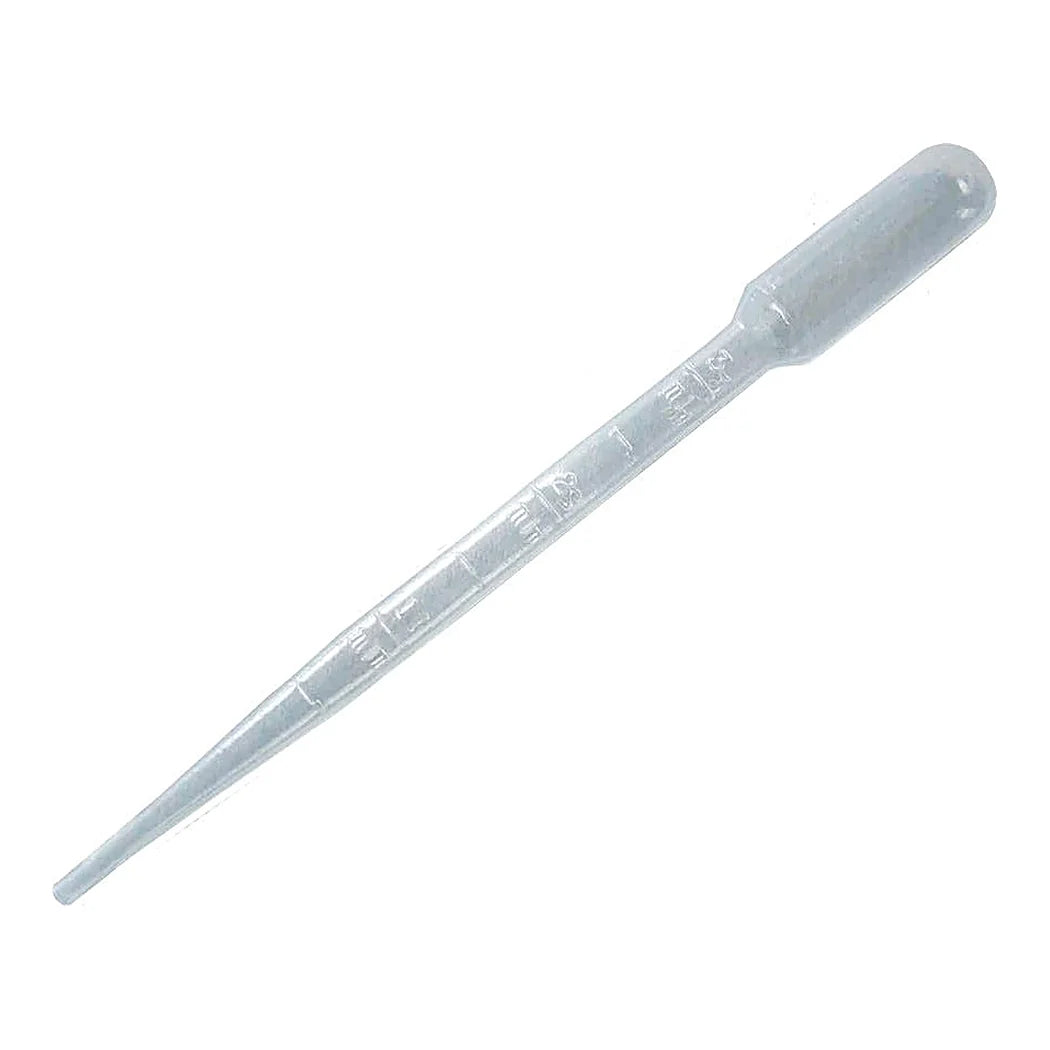
Additives are the part of a feed programme where small errors do real damage. A product dosed at a quarter of a millilitre per litre has no margin, and a measuring cup cannot resolve that. This pipette is graduated from 0.5 up to 3 ml, which covers almost every additive rate in a small reservoir. The stem is narrow enough to go down the neck of a concentrate bottle without decanting first. Squeeze the bulb, draw past your mark, then release slowly back to the line with the pipette held upright. Read at eye level, because looking down at a meniscus reads high every time. Being disposable is a feature rather than a saving. One pipette per product means a pH adjuster never meets a microbial inoculant on the same plastic. That matters most with living products, where a trace of sanitiser undoes the whole dose. They are not laboratory glass, so hot liquids and solvents will soften or distort them.
Nutrient Dosing Habits That Make the Measurement Worth Taking
Nutrient dosing goes wrong in the gap between what the label says and what actually lands in the tank. Work out the dose for the whole reservoir once, write it on the lid in marker, and stop recalculating at the tank. Add each part to already moving water rather than into a still tank or, worse, on top of another concentrate. Rinse nothing back into the bottle, because a rinsed pipette carries tank water into your concentrate. Keep a handful in a jar by the reservoir and treat them as consumable, not as equipment. Label the jar if more than one person mixes, since a used pipette looks identical to a clean one. For volumes above three millilitres a graduated syringe is the better tool and holds its accuracy better. For anything under half a millilitre you are past what this can resolve honestly. For anything above three millilitres a syringe or a measuring cup is the better tool.
Key Features
- Graduations: 0.5 up to 3 ml
- Type: Disposable, meant to be discarded rather than washed
- Why disposable matters: One per product, so nothing cross contaminates
- Reach: The stem enters a concentrate bottle neck directly
- Best for: Additives dosed in fractions of a millilitre
- How to read it: Hold upright and read the meniscus at eye level
- Not for: Hot liquids or solvents, which distort the plastic
- Above 3 ml: A graduated syringe holds accuracy better
- Quantity: Sold as a single item
Technical Specifications
| Specification | Value |
|---|---|
| SKU | HGPIP |
| Brand | Hydrofarm |
| Product | A disposable pipette for small doses |
| Volume | 3 ml |
| Graduated range | 0.5 to 3 ml |
| Reusable | No, it is a disposable item |
| Quantity | One per unit |
| Typical use | Measuring small additive doses into a reservoir |